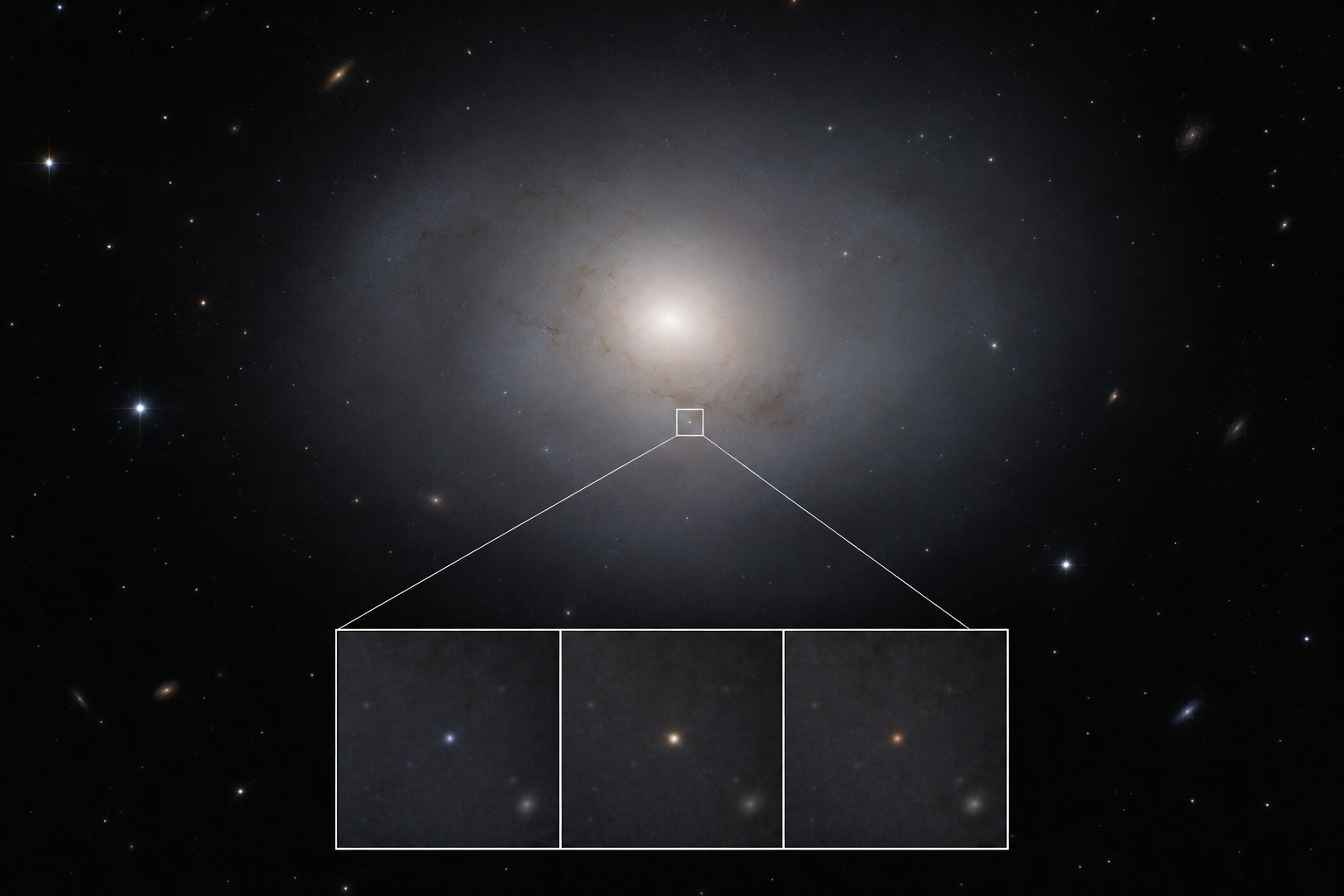
NASA describes neutron stars as the ultra-dense, city-sized remains of dead stars. When two collide, the agency says they may produce a short-lived burst of light known as a kilonova. According to NASA, these exceptionally powerful events form much of the universe’s gold, platinum and other heavy elements. A kilonova can fade within days, requiring astronomers to locate it quickly, while no single observatory can monitor the entire sky. NASA says people with access to a camera-equipped telescope can help discover and observe these cosmic displays through its Kilonova Catcher project.
Kilonova Catcher brings amateur astronomers worldwide together in a rapid-response network. After gravitational wave detectors or space telescopes issue an alert, volunteers aim their telescopes toward the relevant area of the sky to assist in locating and monitoring the fading light. NASA says the network also conducts follow-up observations of gamma-ray bursts, described by the agency as the universe’s most powerful explosions, and observes other fleeting cosmic events when opportunities emerge.
According to NASA, the Kilonova Catcher network includes more than 150 registered members across several continents. The volunteers collaborate with professional astronomers and observatories and have contributed to more than 64 official reports distributed through NASA’s General Coordinates Network, which scientists use to communicate discoveries in real time. Volunteers have also received credit for their observations as named authors of peer-reviewed scientific research papers. During the Artemis II mission, Kilonova Catcher volunteers participated in the campaign for NASA’s lunar Impact Flash! project, documenting the small flashes produced when meteoroids hit the Moon. NASA says the network is preparing to help investigate thousands of new alerts from the agency’s new Nancy Grace Roman Space Telescope.
“Here at Kilonova Catcher, by chasing the light from gravitational-wave events, we’re seeing how a single collision reaches across the universe,” said Cristina Andrade, Kilonova Catcher head of operations at the Minnesota Institute for Astrophysics. “The observatories that make this possible will produce an unprecedented amount of data. We need more human minds, more people with their eyes on the sky and on the data, both literally and figuratively. And more importantly, we need more people to realize they are capable of great feats of science, regardless of their background.”
Andrade co-leads the Kilonova Catcher project with Principal Investigator Dr. Damien Turpin, a researcher at the French Alternative Energies and Atomic Energy Commission (CEA). Damien said, “I am inspired by the expertise and drive of our amateur astronomers. They are always digging for more information and pushing the limits of their understanding. This science could not be done without their contributions.”
NASA says anyone with access to a telescope equipped with a camera can participate. Prospective Kilonova Catchers can register at https://kilonovacatcher.in2p3.fr/ or email kilonovacatcher@gmail.com.
Learn More and Get Involved
Kilonova Catcher
NASA invites participants to use backyard telescopes to search for what it describes as the most cataclysmic collisions in the universe.
@nasascience_@nasascience_@nasascience_@nasascience_
Based on a NASA news release · Read the original ↗