NASA’s Astronomy Picture of the Day (APOD) presents a different image or photograph of the cosmos each day, accompanied by a short explanation from a professional astronomer.
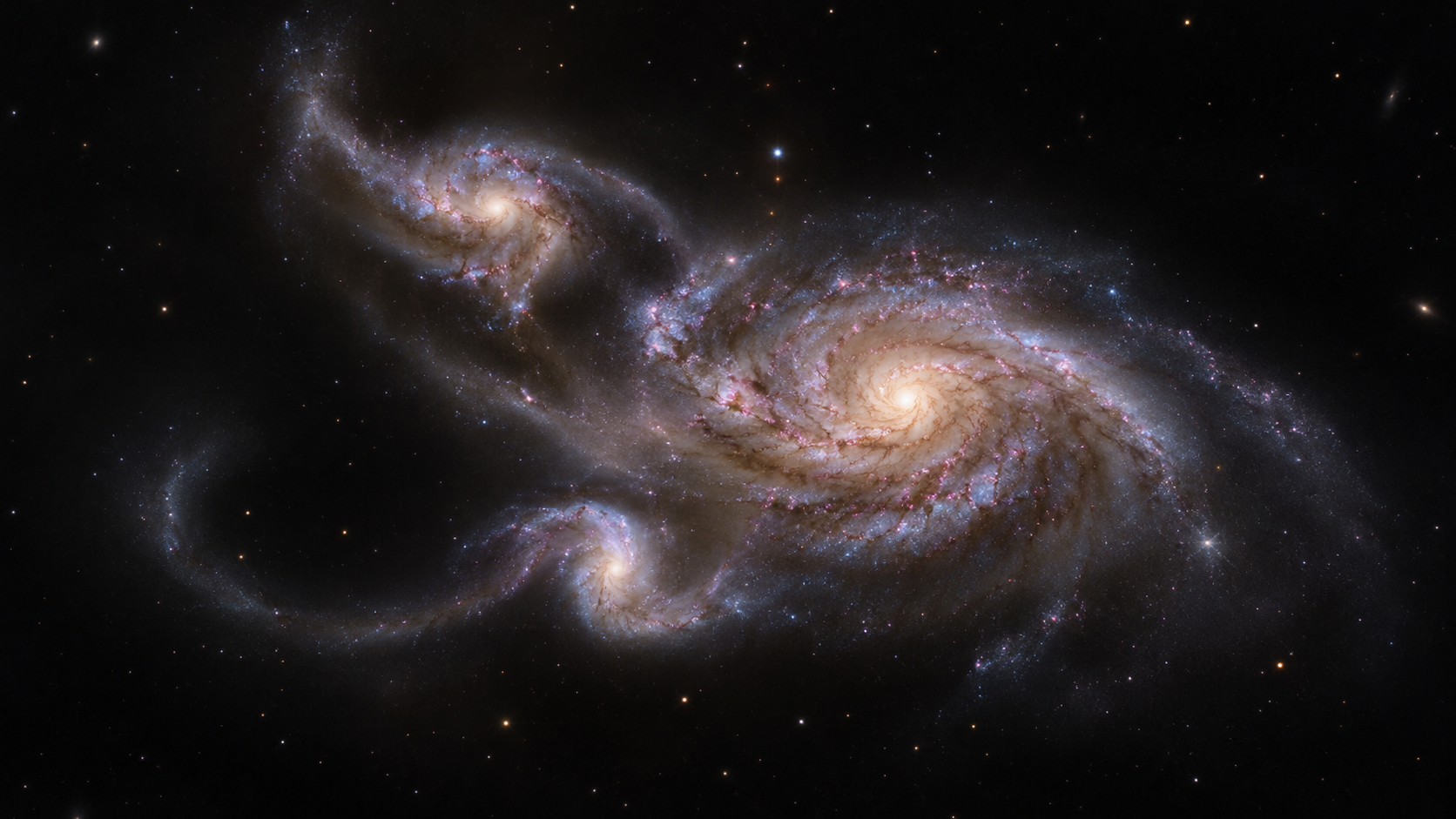
Explanation: NASA says this galactic struggle will ultimately leave only one galaxy. The featured image already shows rings and faint swirls of stars produced by previous gravitational encounters.
Collectively called the NGC 7771 Group, the galaxies are located almost 200 million light-years away in the direction of the high-flying constellation Pegasus. The largest member, the barred spiral NGC 7771 at the lower right, measures about 75,000 light-years across. At the upper left is the spiral galaxy NGC 7769, which is nearly as large.
According to NASA, repeated close passages among these galaxies and other smaller galaxies will likely lead all of them to merge into one very large galaxy. The process will unfold over billions of years and is understood to be a normal feature of galaxy evolution.
NASA says studying galaxy clashes such as this one can help humanity better understand the possible merger between the Milky Way and Andromeda galaxies.
Tomorrow’s picture: open space
Date: November 24, 2026
Credit & Copyright: Roberto Marinoni
Authors & editors: Robert Nemiroff, Jerry Bonnell, Cecilia Chirenti, Keighley Rockcliffe
APOD is a service of ASD at NASA / GSFC, NASA Science Activation and Michigan Tech. U.
Random APOD Generator
Yesterday’s Image: APOD: 2026 November 23 – The Emergence of Dark Nebula Lynds 1251
Tomorrow’s Image
Based on NASA's Astronomy Picture of the Day · Read the original ↗