Moving toward tomorrow
VA News reports that Army Veteran Randy Jamerson had learned to adjust to difficult circumstances long before a spinal cord injury transformed his life.
Jamerson joined the Army when he was 21. Decades afterward, he says the lessons he learned through military service helped prepare him for a challenge unlike any he had previously faced.
“If we can adapt to the stuff we went through in the military, we can adapt to this battle,” Jamerson said. “Just because life is not the same as we’re used to, it doesn’t mean life is over.”
How the injury happened
In 2020, Jamerson was employed as a truck driver and getting ready for what he anticipated would be an ordinary run from Mississippi to Tennessee. He had already informed his wife that he intended to retire from trucking.
Once his load was collected, Jamerson stopped for the night before arriving in Memphis. While getting ready to sleep in his truck, he reached toward the upper bunk. He has no memory of what happened next.
Jamerson subsequently learned that a sledgehammer fell and hit the back of his neck, damaging his C4 vertebra. He could not reach his phone and was trapped in the truck for three days until police discovered him.
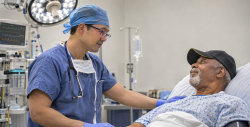
By the time Jamerson awoke in the intensive care unit, his circumstances had been fundamentally altered.
His wife, Mosetta Jamerson, recalls the telephone call in which she learned that he had lost sensation in much of his body.
“Frist, I cried, and the second thing was fear,” she said. “What’s going to happen now? What is our life going to be like now?”
Jamerson struggled to come to terms with what had happened.
“I did not accept it,” he said.
Working toward recovery
During the years following the injury, Jamerson has worked with the spinal cord injury rehabilitation team at the Lt. Col. Luke Weathers Jr. VA Medical Center in Memphis, Tennessee, seeking to recover function and greater independence.
According to VA News, the facility is among 25 VA Spinal Cord Injuries and Disorders Centers (SCI/D) across the country. The Lt. Col. Luke Weathers Jr. VA Medical Center serves as a hub within VA’s national SCI/D system of care, delivering specialized rehabilitation, medical treatment and additional services to Veterans throughout the region. It also coordinates continuing care with VA facilities located nearer to Veterans’ homes.
“The Memphis VA has been a tremendous asset to his recovery,” his wife said. “The spinal cord unit that they have here is truly a blessing, because he probably wouldn’t get that therapy if not for VA.”
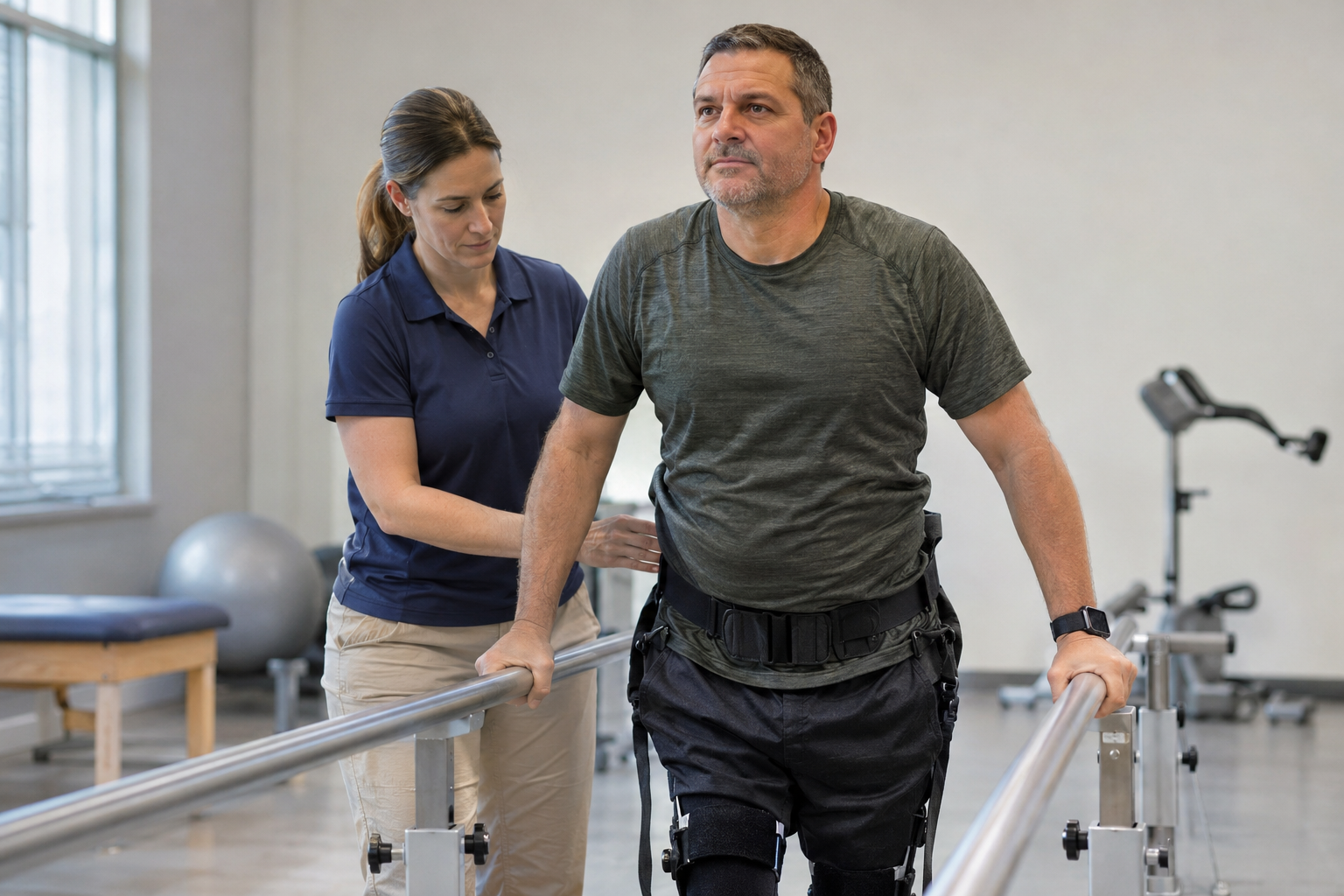
In the rehabilitation gym, improvement is assessed differently from the way it was before Jamerson’s injury. His therapists guide and encourage him as he practices actions that were once automatic, including standing, transferring his weight and stepping.
“I’m walking a little bit now,” he said. “And I’m getting stronger. I’m going to keep walking more.”
Jamerson has also developed a close connection with the VA rehabilitation team involved in his recovery. They exchange jokes between exercises before returning their attention to the work.
“They work hard helping me,” Jamerson said. “And I’m going to work hard, because I owe it to them and myself.”
His support has not been limited to treatment inside the medical center. Adaptive equipment and alterations to the Jamerson home have made navigating the house easier and helped him recover portions of the independence he once assumed he would always have.
“My life has changed so much because I’m not used to depending on people,” he said.
As he has adapted, Jamerson says his wife, children and extended family have continued to support him.
“I couldn’t ask for a better support system from my wife, my children, my family,” he said. “They stepped up, and I appreciate it.”
Support outside rehabilitation
VA News says that for Veterans such as Jamerson, care for a spinal cord injury continues beyond individual rehabilitation appointments.
Along with conventional medical treatment, adaptive equipment, accessible changes to the home, recreation and adaptive sports may help Veterans discover different ways to preserve their activity and independence.
According to VA News, VA adaptive sports and creative arts programs give Veterans who have spinal cord injuries or other mobility limitations opportunities to explore what they can do. The available activities cover varied abilities and interests, from adaptive cycling, bowling and golf to snow sports and water sports. Creative arts programs offer other forms of participation and personal expression. Some Veterans initially take part for recreation or as another means of staying active. For others, involvement may develop into competitive sports and appearances at national events, including the National Veteran Wheelchair Games. VA News says these programs can give wheelchair-using Veterans opportunities to build skills, restore confidence and form connections with fellow Veterans.
For Jamerson, each of those possibilities supports the objective that has shaped his recovery: continuing to move ahead.
“We all need the same opportunities,” Jamerson said. “There are so many tools, so much advancement with spinal cord injuries. Everybody should have a chance to walk if they want to.”
Jamerson is certain about his own goal.
“And I’m going to.”
Jamerson shares his story in this video:
Based on a VA News news release by Nikki Verbeck · Read the original ↗