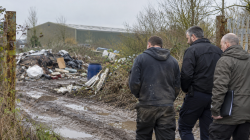
After a mine ceases coal production, operators are required to "reclaim" it—meaning restore the land to reduce environmental and health risks. U.S. GAO found that more than half of the over 5,000 permits for coal mining in the U.S. had recorded no coal production since 2000. Hundreds of those sites had not been reclaimed.
The Department of the Interior oversees coal mine reclamation, but U.S. GAO reported that it lacks data showing how long operators take to reclaim mines fully. According to U.S. GAO, this information could help identify mines presenting the greatest environmental and health risks.
U.S. GAO recommended that Interior address this issue and others.
The Department of the Interior’s Office of Surface Mining Reclamation and Enforcement (OSMRE) was established under the Surface Mining Control and Reclamation Act of 1977 (SMCRA) to perform responsibilities that include administering programs designed to control the effects of surface coal mining operations in the U.S. Available data showed that, as of spring 2025, more than 5,000 permitted coal operations were located across 25 states and four Tribes. Most permits had no associated coal production since 2000, while about 35 percent of all permits covered sites undergoing reclamation.
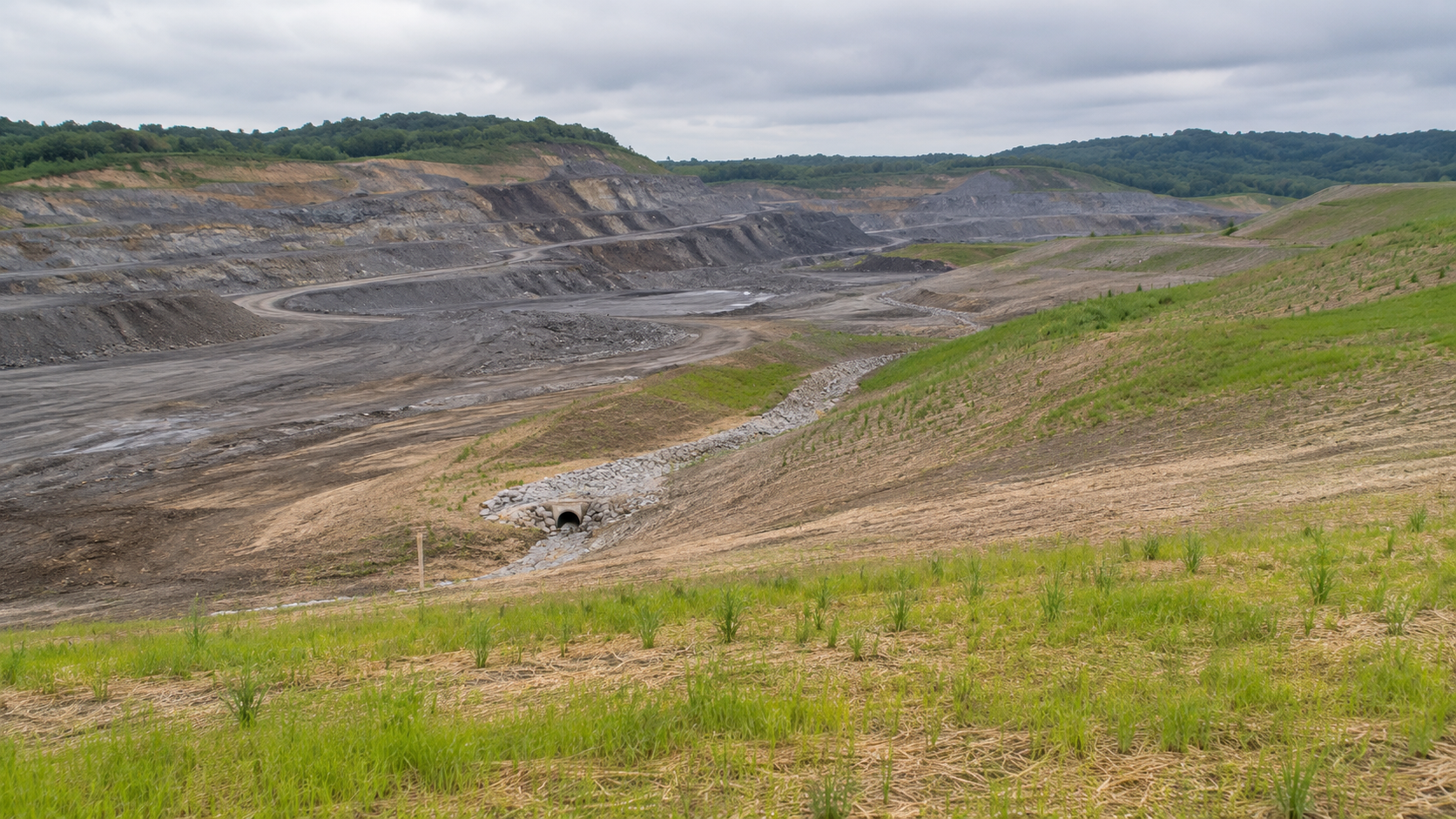
Example of a Reclaimed Mine Site and Active Coal Mine Site in Appalachia
During interviews and in survey responses, stakeholders identified several obstacles to timely reclamation of coal mine operations, including the capacity to administer and oversee programs. OSMRE’s workforce declined from 408 employees in 2024 to 265 in May 2026—a 35 percent reduction—primarily because of deferred resignations, an executive branch hiring freeze, and restructuring within the Department of the Interior. OSMRE officials said the staffing reductions affected several areas of program oversight. Interior officials, however, told U.S. GAO that the department had not performed strategic workforce planning before the reductions and, as of August 2026, had not evaluated OSMRE’s future operational capacity. U.S. GAO said OSMRE may encounter difficulty carrying out its regulatory and program-oversight responsibilities without strategic workforce planning that identifies essential staff competencies and skills.
OSMRE evaluates progress toward SMCRA’s goals of protecting people and the environment and reclaiming mined lands through four performance measures. U.S. GAO found, however, that the agency has no measures for determining how long operators take to complete reclamation at non-producing mines and return the sites to beneficial post-mining uses. U.S. GAO described this as important information for identifying mines that may expose the federal government to financial risk or present an environmental risk. U.S. GAO also reported that OSMRE has not published a statutorily required annual report describing activities conducted under SMCRA since 2020. OSMRE officials attributed the lapse to other priorities since that time. According to U.S. GAO, failing to issue the reports means OSMRE is missing an opportunity to give Congress nationwide program-performance information that could support actions to advance SMCRA’s goals and hold the agency accountable for results.
With the nation relying less on coal and coal consumption and production declining, concerns have arisen that operators of non-producing coal mines could postpone or avoid reclaiming land disturbed by mining. U.S. GAO reported that unreclaimed mine sites can create environmental, health, and safety hazards. They can also delay the return of land to other productive purposes, potentially harming local economies. OSMRE administers its Title V program to manage the effects of surface coal mining operations and ensure continued efforts to reclaim mined lands.
U.S. GAO was asked to review OSMRE’s Title V program. Its report addresses (1) the number of coal permits and selected permit characteristics; (2) the views of regulatory authority officials, Tribes, and stakeholders regarding challenges to timely reclamation of lands disturbed by mining operations; and (3) how extensively OSMRE evaluates and communicates progress toward its reclamation goals.
For the review, U.S. GAO analyzed documents and data provided by OSMRE and state regulatory agencies responsible for operating their own oversight programs. It also surveyed and interviewed OSMRE officials, state regulatory and tribal officials, and environmental and industry stakeholders. U.S. GAO conducted site visits in Kentucky and Tennessee.
U.S. GAO issued four recommendations. They include recommendations that Interior (1) perform strategic workforce planning for OSMRE, and that OSMRE (2) establish performance measures and gather data to monitor the time required to reclaim mines fully for beneficial uses and (3) restart publication of its annual reports. Interior did not comment on the report.
Based on a U.S. GAO report by U.S. Government Accountability Office · Read the original ↗