NASA says researchers are examining crops that could offer astronauts fresh food, nutrition, and variety during future missions to the Moon and Mars. The value of varied menus in deep space is particularly relevant this week as the nation celebrates Thanksgiving.
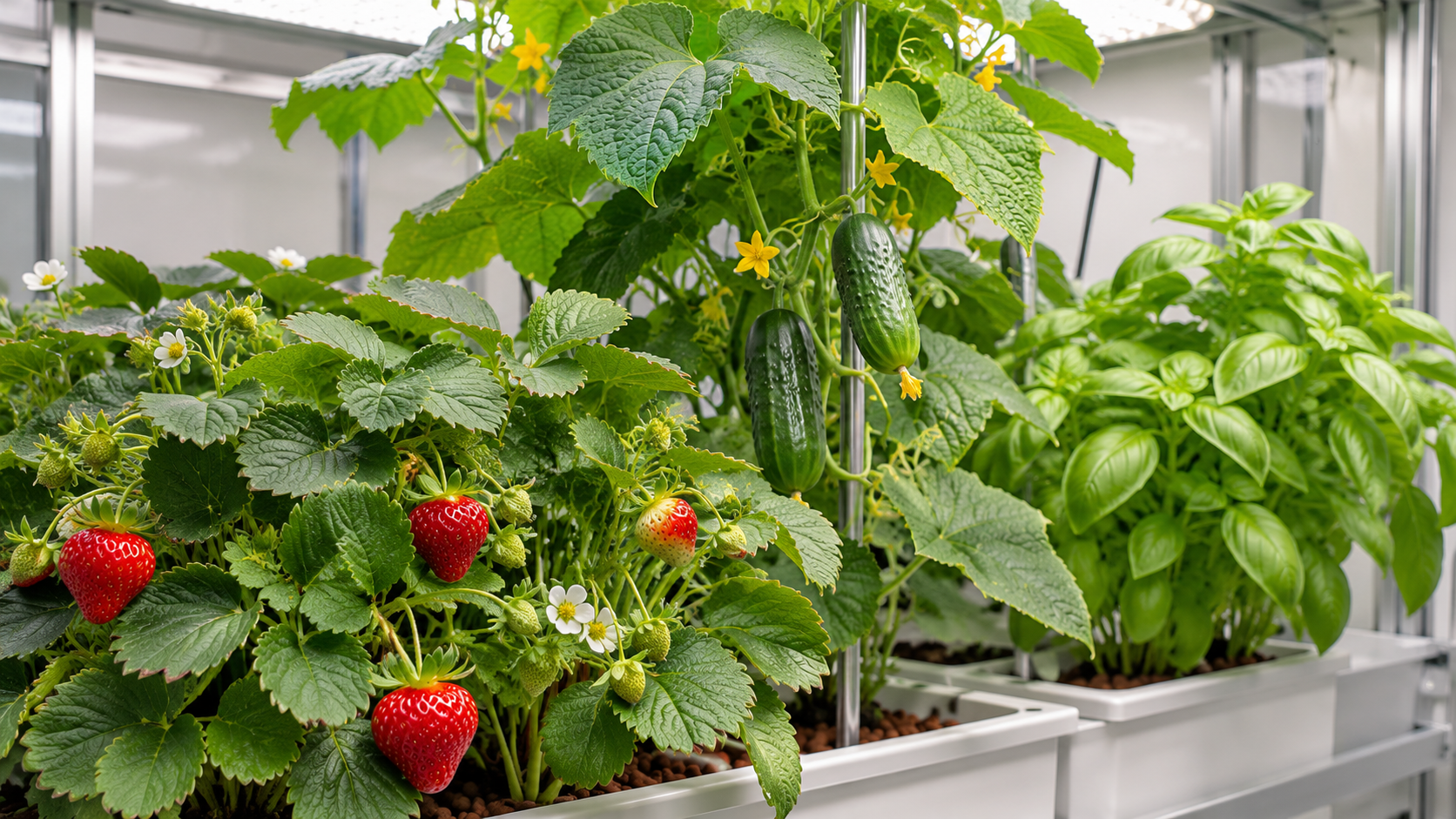
Recent tests have identified strawberries, cucumbers, and lemon basil as possible choices for future explorers. According to NASA, space crops can take in carbon dioxide, generate oxygen, and recycle water—capabilities expected to become more important as crewed missions travel farther from Earth.
Research on space crops is progressing on Earth while related capabilities continue to expand in orbit. A new investigation from NASA’s Biological and Physical Sciences Division is scheduled to launch to the International Space Station. NASA says its first-of-its-kind prototype growth chamber will provide important information for developing crop-production systems capable of growing such plants in future Moon Base habitats and on Mars missions.
Sweet strawberries for space
Among the limited number of sweet fruits being considered for spaceflight, strawberries offer nutritional value and aroma while also being self-pollinating.
At NASA’s Kennedy Space Center in Florida, researchers are cultivating strawberries in flight-like growth chambers to assess their potential as a space crop. NASA partners at The Australian Research Council Centre for Excellence in Plants for Space are also contributing to the growing body of knowledge about space strawberries.
Researchers from NASA Kennedy, the University of Melbourne, and the University of Western Australia recently compared a wild strawberry with NASA’s leading candidate, ‘Delizz,’ to determine which performed better under simulated space conditions.
The two varieties yielded notably different fruit, according to a study published in September in Life Sciences in Space Research. Delizz developed large, red fruit, whereas the wild strawberry produced small, yellow fruit because of a recessive genetic mutation.
Appearance was not the only consideration. When cultivated from seed, the wild strawberry developed twice as many buds, flowers, and fruit as Delizz. NASA nevertheless retained Delizz as its preferred candidate because the wild variety produced too many runners, which would occupy valuable spacecraft space.
Cucumbers emerge as contenders
Although numerous crops have already been grown in space, none has yet belonged to the gourd family. Cucumbers could become the first.
Crops such as cucumbers require extensive evaluation before they can be cultivated and consumed in space. NASA-funded researchers recently studied cucumber growth, yield, and nutritional characteristics under spaceflight conditions.
The plants displayed some indications of enlarged leaves but maintained steady production of edible fruit, according to a study published in August in HortScience.
NASA says providing crops such as cucumbers could add variety that supports astronauts’ diets and mental well-being. Greater plant biodiversity could also improve the chances of successful crop production during long-duration missions.
Adding flavor to spaceflight
Herbs could bring stronger flavors to space, helping turn otherwise bland meals into more appealing food.
Lemon basil, an edible herb known for its citrus flavor and scent, is advancing through testing at NASA Kennedy.
Researchers say lemon basil completed its initial round of space-crop testing and successfully passed through seed sanitization, a required preflight process for removing microorganisms from seeds. The next phase will include evaluating how the herb grows in plant pillows, which can hold plants aboard the space station.
NASA says astronauts can quickly experience menu fatigue, while fresh herbs such as lemon basil can make packaged meals feel new and satisfying and help support human health and performance in space.
Biological & Physical Sciences Division
NASA’s Biological and Physical Sciences Division says it advances scientific discovery and enables exploration by using space environments for investigations that cannot be conducted on Earth. According to the division, research into biological and physical phenomena under extreme conditions can build the fundamental scientific knowledge needed to travel farther and remain longer in space while also benefiting life on Earth.
Based on a NASA news release · Read the original ↗