European Parliament President Roberta Metsola told the European Council that Parliament wants an agreement on the EU’s next long-term budget and believes it should be focused, effective and simple.
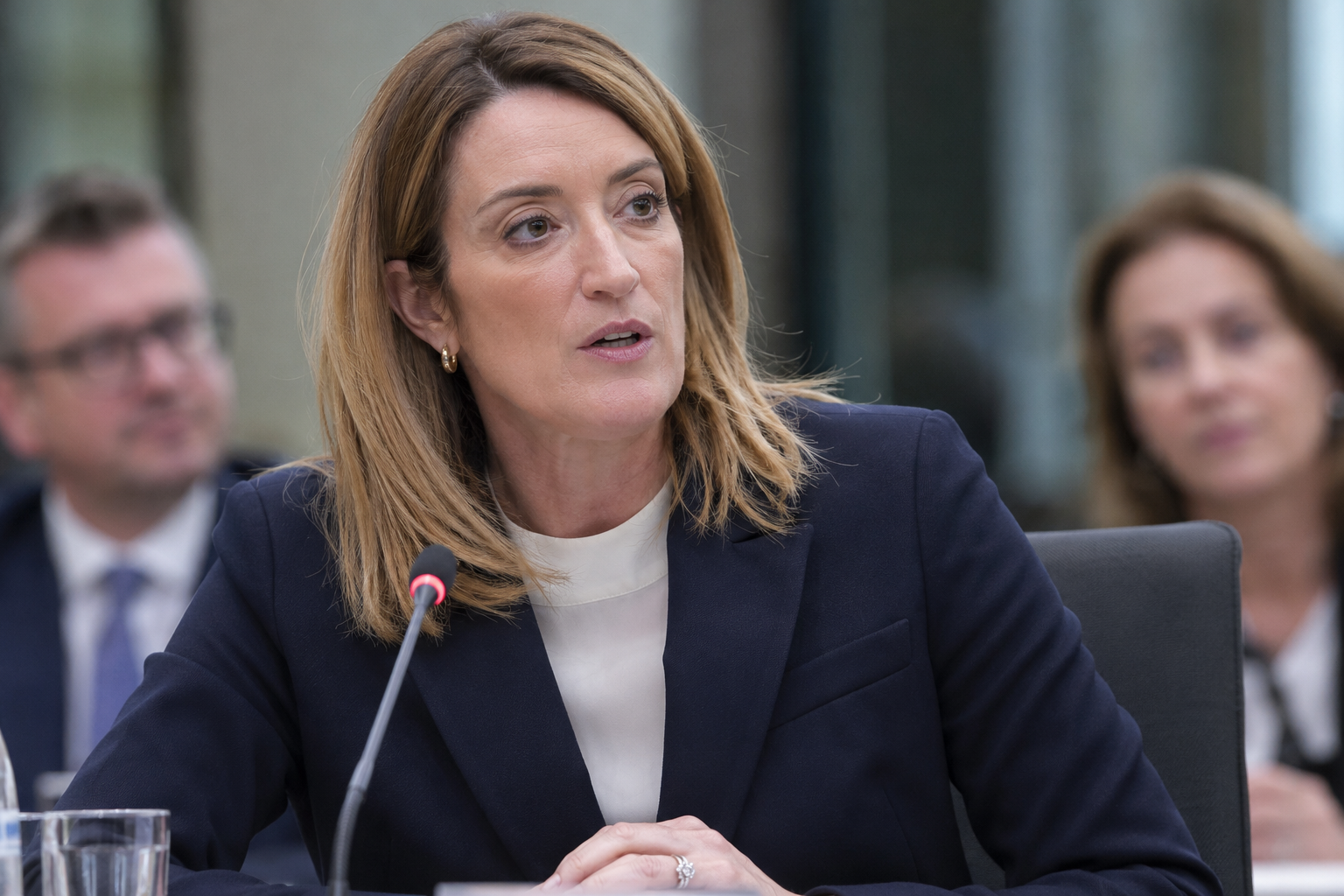
Addressing EU leaders on Thursday, Metsola said that decisions taken by leaders matter only insofar as they produce results for Europeans, while the scale of those results depends on the next long-term budget. She stressed that the European Parliament wants to secure an agreement as soon as possible.
According to Metsola, Parliament demonstrated that intention by adopting its position in April. She noted that the President of the European Council has since presented revised figures. Although some areas of agreement exist, she said further work is still required elsewhere and described that as expected. She added that reaching agreement among 361 should not be underestimated, even if securing consensus among 27 is difficult.
Metsola reiterated that Parliament has never served as a rubber stamp and will not do so. She said majorities have repeatedly proved harder to assemble during the current legislature. Nevertheless, she maintained that a majority of voting MEPs supports a budget designed to help the economy grow, sustain the social safety nets on which people depend and reinforce the European Union’s position in the world. In her view, the MFF should reflect European ambition and confidence, and the current approach can be improved.
She distinguished the MFF from a national budget, describing it as an investment framework. Citing some estimates, Metsola said Europeans receive three euros in return for every euro contributed and argued that this return should inform decisions about priorities.
Metsola identified three areas that Parliament believes must be addressed correctly in the next long-term budget.
The first concerns the budget’s structure and the activities it finances.
She said the next MFF must be focused, effective and simple.
In Metsola’s account, a focused MFF directs funding toward the public’s priorities. She said the European Parliament established competitiveness and defence as its twin priorities at the beginning of the current term and welcomed agreement that both should guide the next MFF. However, she questioned how a further 22 billion euro reduction to the Competitiveness Fund, leaving it 52.5 billion euros below the Commission’s proposal, could be reconciled with that shared ambition. If leaders agree on the priority and recognize its clear, present and real necessity, she argued, the financing must correspond to it.
An effective MFF, Metsola said, should deliver visible outcomes, including renovated schools, modernised hospitals and upgraded roads. She noted, however, that the proposal would reduce cohesion funding by 46.2 billion Euro at current MFF prices, a decision she said would need to be explained to the public.
Metsola pointed to what she described as an encouraging precedent, saying a comparable deadlock was resolved last year by ring-fencing part of the funding for agriculture. She said that outcome provides a basis for further work and that Parliament is prepared to cooperate with EU leaders on another way forward.
She argued that a simpler MFF should be judged by whether it produces practical improvements for the people and businesses seeking to use it. Taxpayers, she added, should be able to understand where their money is spent and how it benefits them. Metsola therefore supported streamlining the process and said organising the MFF under four headings is the correct approach.
On the budget’s design, Metsola said Parliament agrees that the next budget must give Ukraine stable, long-term support. She argued that lasting peace is not possible without Europe’s involvement and backing. She also called for stronger efforts to explain what that support means for the future of all European nations and why financing for Ukraine matters.
Metsola said the case must continue to be made that supporting Ukraine is fundamental to the security of Europe. In her assessment, the issue goes beyond solidarity and is existential for all Europeans. She added that the European Parliament can help communicate that argument.
Calling for an MFF that is fit for purpose, Metsola also acknowledged the pressure created by already stretched national budgets. She cited those constraints as the reason new revenue sources are needed and said Parliament has advocated them from the outset. While noting that the available options and details still require discussion, she expressed support for new own resources as the appropriate means of closing the existing gap.
Metsola said that, even if all necessary own resources are secured, economic growth remains the only ultimate solution. She called for a boost to European economies and for a framework that gives industries the confidence to create prosperity, reduce bureaucracy and function as an accelerator rather than a brake on innovation. Over the long term, she said, this is what will protect the European way.
She reported that Parliament adopted most of its sectoral positions in plenary this week and said the remaining positions would follow in the coming weeks. The next step, she explained, is for leaders to agree on the Council’s negotiating position, whether today or in December, allowing negotiations among the institutions to begin.
Metsola said the European Parliament is prepared to enter those talks immediately. She noted that people and businesses are waiting for the investment and that every month lost extends that wait by another month. She also warned that Europe’s political circumstances next year will make finding the time and space for an agreement increasingly difficult.
She urged the institutions to shift from fixed red lines toward areas where an agreement can be reached, while remaining focused and maintaining momentum. Metsola said the three institutions work effectively together by defending their respective positions while finding paths forward. She expressed confidence that the same could be achieved for the MFF with the right approach, provided everyone around the table adopts a shared mindset.
Based on a European Parliament news release · Read the original ↗