
So, What Does the Word Mean?
Break it into pieces. “Photo” is light. “Bio” is life. “Modulation” means changing something a little. Put together, photobiomodulation means using light to gently change how living cells behave.
Some people call it low level light therapy. The “low level” part is the key. The light is weak. It doesn’t burn, cut or feel hot. It is nothing like a surgical laser.
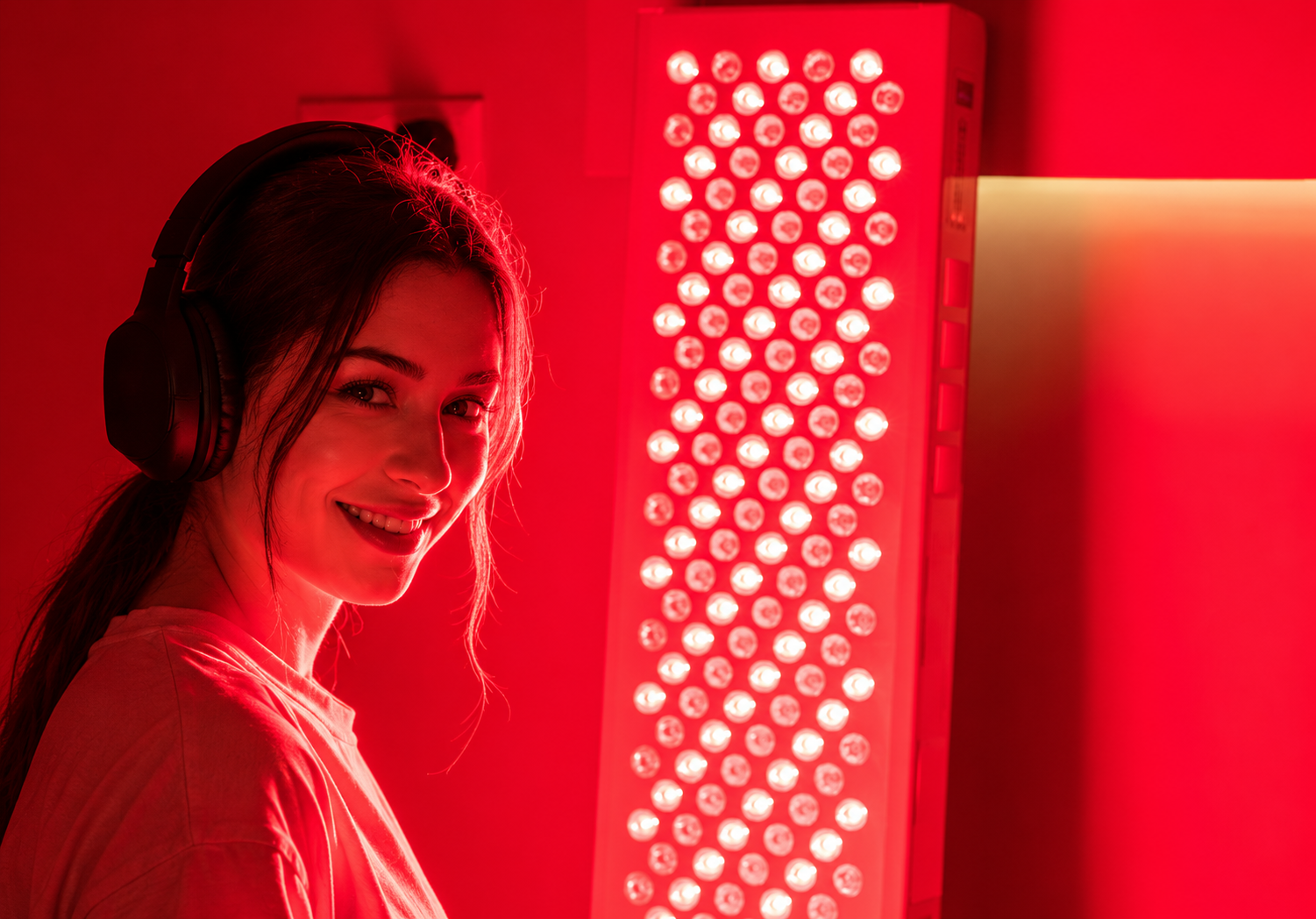
Photobiomodulation therapy usually uses red light, or a type just past red that eyes can’t see. The light sits on the skin for a few minutes at a time. That’s pretty much the whole process. There’s no needle, no cream and no recovery time afterwards.

The Red Light Therapy Science in Plain Words
Cells have tiny parts called mitochondria. They make the energy cells need to do their work. Researchers have found that some of these parts soak up red and near infrared light.
The thinking is that this gives the cell a small energy boost. A cell with more energy may repair itself better, calm down irritation and let blood flow a little easier. Picture a phone on a low battery getting a quick charge. That’s the basic story behind red light therapy science.
Studies have looked at sore joints, tired muscles and skin. Some results look encouraging. Others say more work is needed. So it’s best to see it as a helpful extra, not a cure for anything. Anyone who reads a claim that sounds too good to be true should be a little careful.
Red Light and Near Infrared
You’ll see two types of light again and again.
Red light is visible. It stays near the surface, which is why it’s popular for skin. A soft red glow shows when the device is on.
Near infrared light is invisible. It goes deeper, which makes it a common pick for joints and muscles. Near infrared therapy is a favourite with athletes for this reason. Most people feel nothing, or just a little warmth.
Plenty of devices combine both, so shallow and deeper layers get light at once. When comparing products, look at which light they use and where on the body it’s meant to go. Low-level light therapy only helps if the light reaches the right spot. A device made for the face won’t do much for a knee.
Who Tries It and Why
Gym-goers use it after workouts. People with stiff knees, elbows or backs use it on those spots. Some people shine red light on the face as part of a skin routine.
A few cautions matter. It doesn’t replace a doctor. If you have a health condition, are pregnant or have a skin problem, check with a doctor first. Keep the light away from your eyes, and follow the guide in the box.
Don’t expect overnight results either. Most guides suggest using it daily for a few weeks before judging. Photobiomodulation therapy is a slow, steady thing, closer to stretching than to taking a pill.
Where Kineon Fits In
Most red light products are big panels that plug into a wall. You have to sit still in front of them. Kineon went a different way with a wearable design. The device wraps around a joint and stays put while you relax or move about. It uses both red and near infrared light, and it recharges, so it works at home or on a trip.
That wearable style is what stands out. There’s no holding a lamp for ten minutes. You strap it on, start a short session and get on with your day. Near infrared therapy for a knee turns into something that fits around your schedule instead of taking over it.
Getting Started
Pick a goal first. Joint comfort? Recovery? Skin? Your answer helps you choose the right device.
Keep sessions short and regular. A few minutes a day works better than one long session a month. Write down how you feel each week, so you can spot changes. A simple note on your phone is enough.
Photobiomodulation is simple at its core. Gentle light helps cells do their job. The research is still growing, but interest keeps rising, and home devices make it easy to try. If it sounds interesting, check out what Kineon offers and see if it fits your routine.