Official European Union websites use addresses in the europa.eu domain.
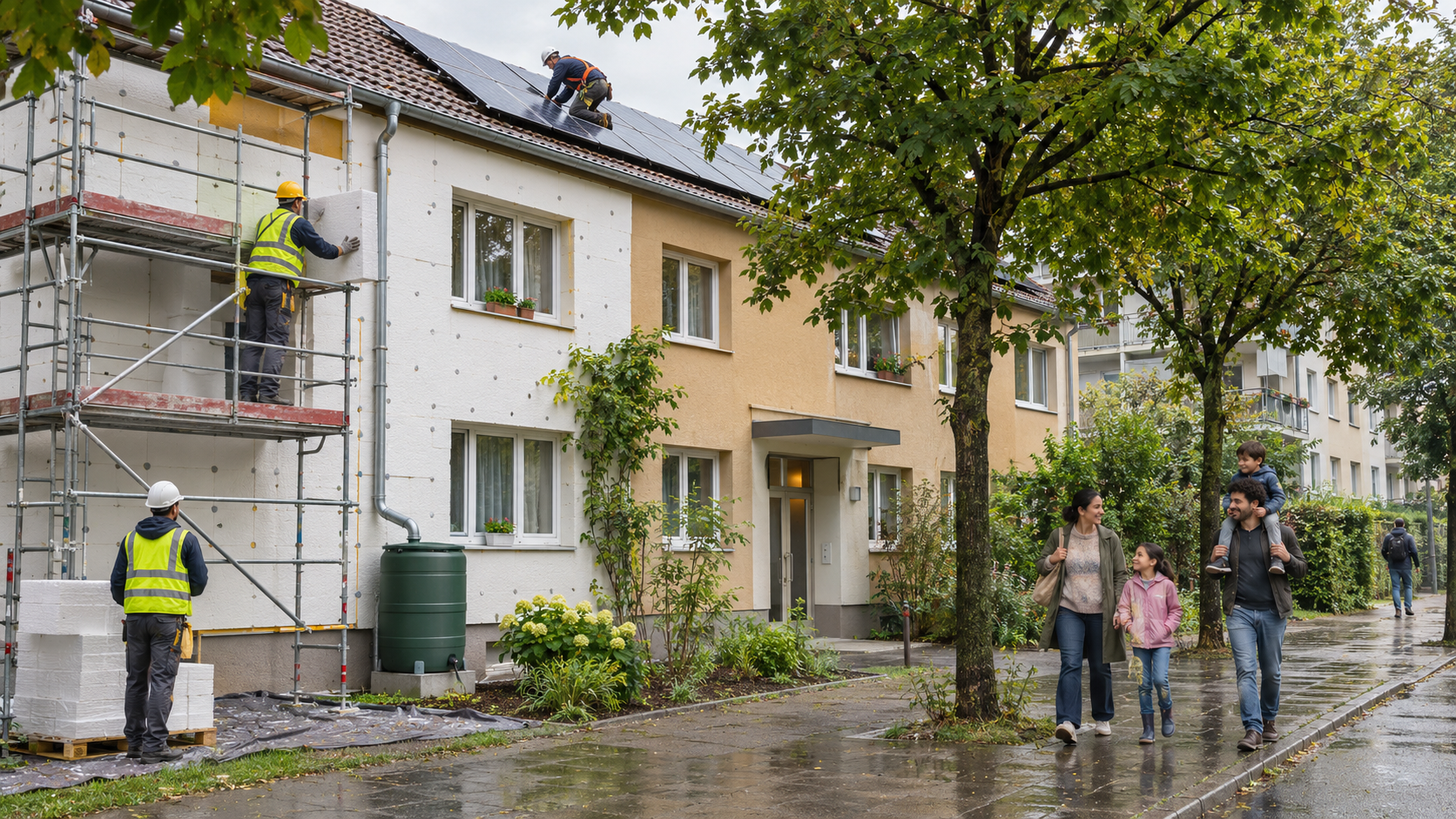
Europe’s homes and other buildings are not yet adequately prepared for climate extremes, according to two European Environment Agency studies published today. The studies say investments in energy efficiency and climate resilience across new and existing buildings could benefit low-income households while helping advance the EU target of becoming carbon neutral by 2050.
The European Environment Agency says these measures would be especially beneficial to lower-income households by reducing energy bills, improving local air quality and human health, and strengthening climate resilience.
Renovation will be important because more than 85% of today’s buildings are expected to remain in use in 2050, according to the EEA report "Exploring socially just energy renovation of residential buildings". The study says this will require substantially more public and private investment. It also calls for reversing the recent decline in energy efficiency investment and incorporating fairness and affordability into the design of energy renovation support to better assist middle-class and lower-income households.
According to the report, improved insulation and a transition to cleaner, fossil-fuel-free heating and cooling could lower energy consumption. These changes could make it easier for more households to maintain adequate warmth during winter and cool temperatures during summer, while limiting exposure to fossil energy and high energy costs.
The European Environment Agency says lowering emissions from Europe’s existing building stock will be essential for the European Union to meet its legally binding climate-neutrality objective by 2050. Reduced household energy use would also decrease Europe’s dependence on fossil fuel imports.
Billions of euros have already been allocated through EU-level financing and programmes for energy efficiency renovations during the 2021-2027 period. However, the report says public funding cannot by itself provide the investment required at the necessary scale, and greater private investment will also be necessary.
The report further says national and local authorities should consider policies that speed up renovation while maintaining social fairness and tackling energy poverty.
Possible measures include targeted subsidies and local "one-stop-shops" that offer tailored, proactive assistance to vulnerable and lower-income households.
According to the agency, the benefits are particularly important for vulnerable and low-income households, which are more likely to face energy poverty and to live in homes with poor energy performance and polluting heating systems.
The report cites evidence that financial, administrative and behavioural obstacles have kept vulnerable households from investing in renovations. In 2024, 9.2% of the EU population could not keep their home adequately warm. Energy poverty is also increasingly linked to households being unable to keep their homes sufficiently cool during high summer temperatures and heatwaves, particularly in Southern Europe. The report says this makes targeted use of existing financial assistance, including the EU Social Climate Fund, essential for addressing energy poverty and supporting energy renovations.
A separate EEA briefing, "Towards climate-resilient affordable housing in Europe," also published today, examines how EU housing and climate policies could respond to Europe’s interconnected housing and climate crises. It says climate change and unaffordable housing can intensify one another and frequently affect the same lower-income households.
Climate effects including heatwaves and flooding can increase the expense of keeping a home safe and habitable. Meanwhile, unaffordable housing can confine households to lower-quality homes and leave them with less ability to adapt. The briefing says the EU Framework for Climate Resilience and the proposed Affordable Housing Act create a policy opportunity to incorporate climate resilience into the next phase of housing investment, without allowing affordability to undermine resilience, energy consumption, greenhouse gas emissions or quality.
Based on a European Environment Agency news release by a7475420-242f-4a40-9dda-06c545cb8c86 · Read the original ↗