Official European Union websites use addresses in the europa.eu domain.
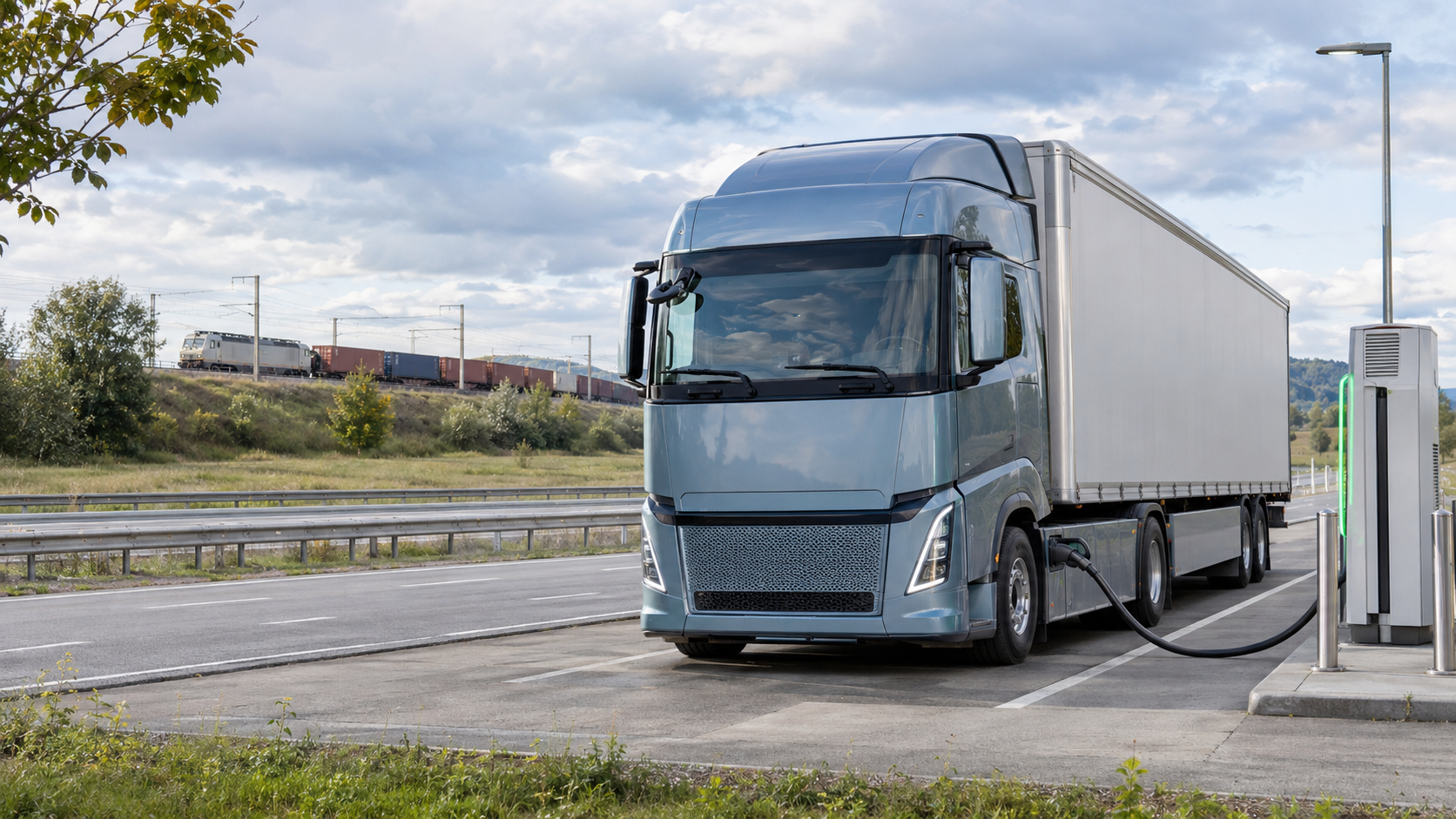
Electric truck sales are increasing in Europe, although electric vehicles continue to account for only a small proportion of newly registered trucks. Assessments published today by the European Environment Agency (EEA) indicate that expanding their use will require charging infrastructure and electricity grids to keep pace. The agency says electrification must be accompanied by a move toward more energy-efficient transport modes, including rail, to lower emissions and reduce Europe's reliance on imported fossil fuels.
The EEA briefing 'Where the road meets the wire: electrifying heavy-duty vehicles in Europe' was published alongside the EEA report 'Sustainability of Europe's mobility systems' and a series of EEA indicators covering transport and mobility.
According to the EEA, transport produces around a third of EU greenhouse gas emissions when international aviation and shipping are included, while road transport accounts for more than 72% of transport emissions. The agency says reducing transport's use of fossil fuels is important to Europe's climate goals, energy security and competitiveness. Road transport remains strongly reliant on fossil fuels, with renewable sources or electricity supplying only 7% of its energy.
The EEA says replacing diesel with electricity can reduce dependence on imported fossil fuels and vulnerability to volatile global fuel markets while helping to develop new European industrial value chains. This transition will also require resilient electricity grids and more secure and diversified supply chains for batteries and raw materials. At the same time, electrification will place additional demands on electricity grids and require secure, diversified battery and raw-material supply chains.
Moving heavy-duty vehicles, including trucks, buses and coaches, away from diesel is crucial, according to the agency. Their greenhouse gas emissions in 2024 were more than a quarter above 1990 levels, and these vehicles consume about 42% of the diesel used in EU road transport.
The EEA points to electric city buses as evidence of what can be achieved: they represented almost 60% of new sales in 2025. City buses are especially suitable for electrification because their routes and schedules are predictable, they can recharge at central depots, and public procurement of entire fleets can accelerate adoption. Trucks are beginning to follow this pattern. Registrations of electric trucks increased by 66% in 2025 and accounted for 4.2% of new medium and heavy trucks. Electric models already represent more than 20% of new medium-truck sales, but their share of new heavy-truck sales remains below 2%.
The EEA briefing says that, for many urban and regional operations, the issue is increasingly not whether electric trucks can perform the work, but whether operators can use them reliably and economically. Access to charging, grid connections and total cost of ownership are becoming determining factors.
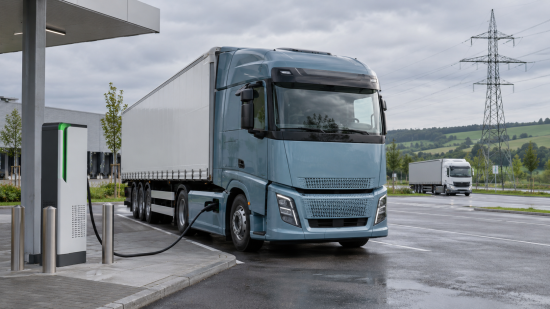
Most operators working in urban and regional settings are expected to charge vehicles at their own depots, whereas long-haul freight will require high-power public charging on major routes. Public truck-charging infrastructure is growing rapidly, with the number of charging points increasing by almost 60% during the first half of 2026. However, only around 3% of the trans-European transport network currently complies with EU requirements for heavy-duty vehicle charging.
The agency says expansion will involve more than adding chargers. It will also require appropriate sites, adequate grid capacity and connections delivered on time, with transport operators, charging providers, grid operators and public authorities coordinating closely.
The transition is most advanced among passenger cars. More than one in four new cars registered in the EU during 2025 was electric, with battery electric models leading the increase, while public charging for cars and vans now covers 73% of the trans-European transport network. Electric van registrations are also rising, although they represented only 11.2% of new van registrations in 2025.
The EEA cautions that cleaner vehicles by themselves will not make Europe's transport system sustainable. Europe is transporting more passengers and freight than ever, and freight activity in 2024 was around 40% above its 1995 level, partly offsetting improvements achieved through cleaner vehicles and fuels. Meanwhile, rail and inland waterways' share of inland freight transport declined from 27% in 2012 to 22% in 2024. The agency says reversing that decline, together with electrification and improved logistics, can reduce energy consumption, emissions and air pollution.
Where direct electrification is difficult, aviation and maritime transport will also need efficiency gains and increased use of sustainable renewable and low-carbon fuels, according to the EEA.
Other pressures persist. With exhaust emissions decreasing, pollution caused by tyres, brakes and road wear is gaining importance, while more than 20% of people in the EU are exposed to harmful transport-noise levels.
Report: Sustainability of Europe's mobility systems 2026
Briefing: Where the road meets the wire — electrifying heavy-duty vehicles in the EU
New registrations of electric cars in Europe; New registrations of electric vans in Europe; Emissions of air pollutants from transport in Europe; Share of trains and inland waterways in freight transport in Europe
Based on a European Environment Agency news release by a2bd312a-9abf-4db5-a0af-2b655b52ef9a · Read the original ↗