UK GOV.UK says England’s green spaces are set to expand under the new Trees Action Plan, with millions more trees and new woodland planned for the public to enjoy.
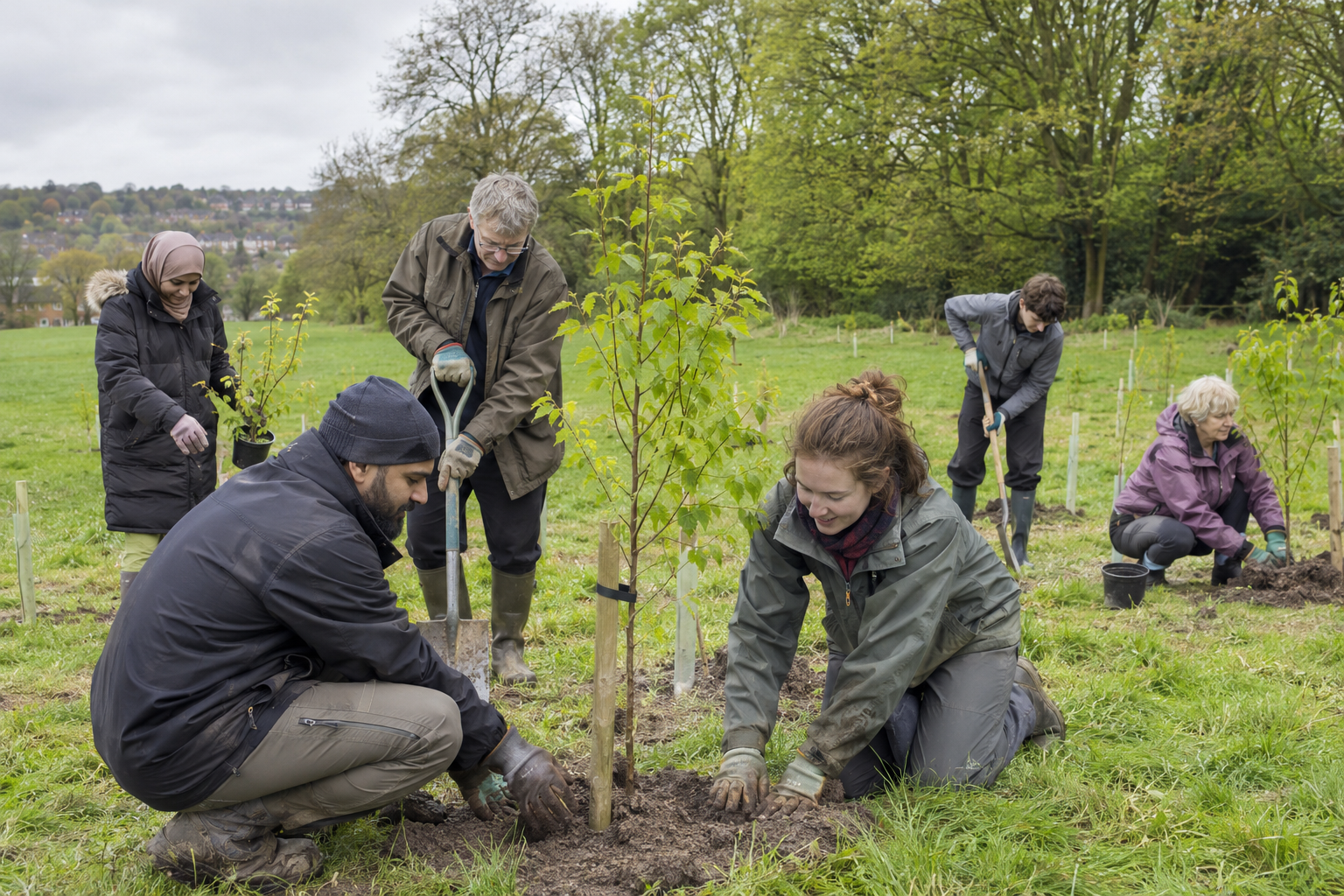
The plan, published today (Thursday 26 November), provides for the planting of millions more trees, the launch of a second National Forest and the creation of new woodland intended to give more people opportunities to enjoy the outdoors.
According to UK GOV.UK, more than £1 billion will be invested in the plan during this parliament. It is expected to open publicly accessible woodland covering an area equivalent to 5,000 football pitches, as part of plans to connect more people with nature near where they live and work.
For the first time, major landowners will be brought together through the National Estate for Nature group. UK GOV.UK says government departments, voluntary organisations, private estates and institutions, including the RSPB and the Crown Estate, will seek to open more woodland for public enjoyment.
The government has also confirmed the proposed 700 square mile area for England’s second new national forest. The planned forest would bring green spaces closer to major towns including Bedford and Milton Keynes, while helping local leaders plant trees at schools and in public spaces.
The Trees Action Plan follows the £53 million Community Trees Fund, which is due to open early next year. The fund is intended to help communities plant up to 500,000 trees outside woodlands and close to where people live, supporting nature in streets, parks and neighbourhoods across the country, including deprived communities.
UK GOV.UK reports that only 26% of adults in the most socially deprived areas currently have green space close to home, compared with 38% in the least deprived areas. It says there is compelling evidence that access to woodland produces public health benefits, including lower healthcare costs.
The announcement describes trees as one of the most effective defences against the type of extreme weather Britain experienced this summer. Street trees in cities can cool the air by as much as 4°C, while a single mature tree can intercept over 15,000 litres of rainwater each year, reducing the risks of flooding and run-off during storms.
UK GOV.UK says the Government is committed to bringing nature closer to communities. It points to the three new national forests being created across England, a 20-year record for England’s tree-planting rates and the £53 million Community Trees Fund.
Under the new plan, the government says it will expand public access to nature, plant millions of trees and use them to improve resilience to climate change.
The Trees Action Plan explains how the government intends to work with industry and stakeholders. Its measures include expanding the public forest estate through 3,700 hectares of new publicly accessible woodland—the equivalent of 5,000 football pitches—to be created by March 2030 and managed by Forestry England.
The plan will also explore opportunities to widen access to woodland through the National Estate for Nature group of major landowners.
More than £14 million will be invested in support for the sector, including training and forestry skills grants, to help provide green jobs.
The government also plans to invest over £20m in research covering trees, forestry and tree health.
A new target will seek to bring more neglected woodland into management to support the recovery of nature and ecology.
Measures to prepare woodland for a changing climate will include increasing the diversity of tree species and strengthening tree-health surveillance and biosecurity.
The plan will also fund domestic production and seed propagation across a broad range of tree-planting stock to deliver that species diversity.
Forest of Marston Vale Trust Forest Director James Russell said: “For over three decades, we’ve been using trees and woodlands to transform 61 square miles between Bedford and Milton Keynes, connecting communities with nature and demonstrating what can be achieved through long-term partnership and ambition. The new national forest provides an exciting opportunity to harness that experience and apply it to an expanded area, stretching from Milton Keynes, through Bedfordshire and into Cambridgeshire.
We are proud to be playing a leading role in delivering the second new national forest, and working with our partners, we look forward to helping establish a new national forest that will benefit people, nature and the economy for generations to come.”
UK GOV.UK says the government has raised tree-planting rates in England over the past two years to their highest level since 2004. The plan sets a course towards increasing tree-canopy cover to at least 16.5% of England’s total land area by 2050. It also describes how the government will support progress towards the Environmental Improvement Plan target of increasing tree-canopy and woodland cover by 43,000 hectares (net) by 2030.
National Forest Chief Executive John Everitt said: “Today marks the second of three new national forests, following the launch of the Western Forest in 2025. I can’t wait to see it take shape, demonstrating how trees and woods can be integrated into new development to support nature’s recovery alongside economic growth.
These ambitious plans will transform tree and woodland cover across the landscape, with planting in urban areas, on farms and with industry all helping us adapt to a changing climate.
The Trees Action Plan commits to securing the benefits trees and woodlands bring for access to nature, wildlife, carbon storage, timber production and in sustaining new green jobs. The plan demonstrates Forestry England’s commitment to support wood processing businesses by establishing resilient, species diverse woodlands with timber production as a key objective.
I’m pleased to see more attention, and support, being given to protecting and improving our existing woodlands. Climate change, diseases and pests are already reshaping where and how our trees grow. Adapting woodlands now to meet these challenges is an essential task for all owners to plan for so, under their stewardship, woodlands are vibrant, productive habitats able to provide benefits to wildlife and people for decades to come.”
UK GOV.UK reports that the Woodland Trust has called for an England Tree Action Plan that places trees and woods at the centre of nature’s recovery and community life in towns and cities. According to the announcement, the plan published today recognises trees as critical infrastructure in people’s lives, helping to create liveable towns and cities for the future and support a resilient food supply from farms.
The Woodland Trust said: “We are committed to help deliver key actions in the new plan to improve access, protect and restore our most valuable trees and establish the new woods and trees of the future.”
Under the UK’s Environment Act 2021, England’s statutory target is to increase tree and woodland canopy cover to at least 16.5% of total land area by the end of 2050.
The Forest of Marston Vale Trust has been confirmed as the delivery partner for the creation of the second new national forest. Towns inside its proposed boundary include Milton Keynes, Bedford, Biggleswade, Sandy, St Neots, Huntingdon and Cambourne, as well as the proposed new town at Tempsford and the twin corridors of the River Great Ouse and East-West Rail.
The name and final boundary of the new national forest will be settled through engagement with local stakeholders and announced in March 2027.
Based on a UK GOV.UK news release · Read the original ↗