The European Parliament has published a press kit containing selected releases on MEPs’ principal priorities for the EU’s 2028-2034 long-term budget.
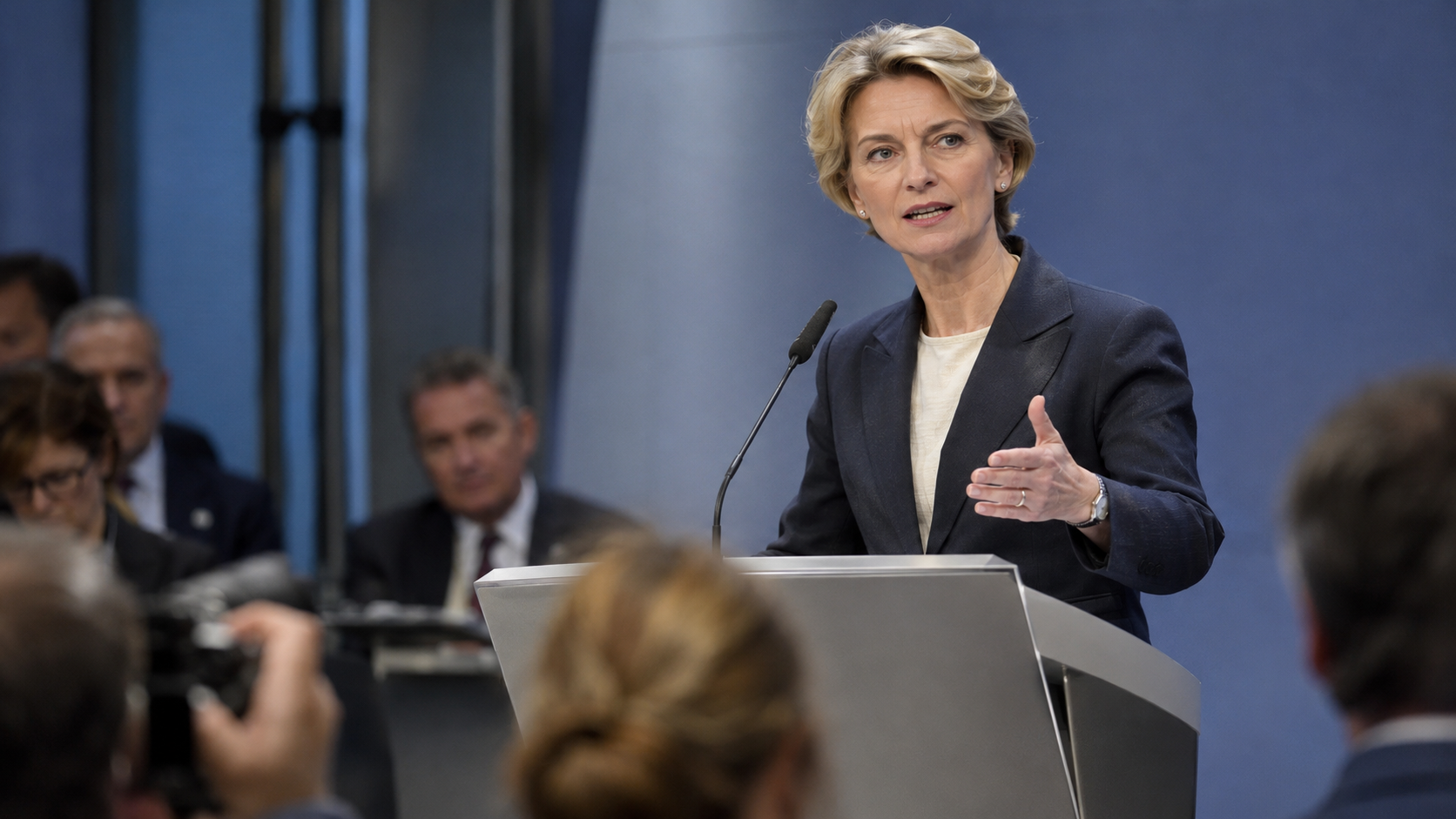
President Roberta Metsola, representing the European Parliament at the summit, is scheduled to address heads of state or government at around 11.00 on 26 November. A press conference will follow.
When: press conference at around 11.30 on 26 November
Heads of state or government are expected to concentrate on the EU’s 2028-2034 multiannual financial framework (MFF) and financial aid for Ukraine. Before that discussion, they will consider current economic developments at a Euro Summit beginning at 10.00.
MEPs discuss recent developments in the 2028-2034 EU budget negotiations
MEPs and Commissioner Piotr Serafin discussed European Council president António Costa’s compromise proposal for the EU’s next multiannual financial framework (MFF) on 25 November.
Referring to President Costa’s proposal, Parliament’s MFF co-rapporteur Siegfried Mureşan (EPP, Romania) said, “It is a weaker position for a weaker EU, and the European Parliament cannot support this,” According to Mureşan, Parliament and Council agree on the priorities — doing more to protect citizens and reinforce Europe’s economy — but “Parliament is consistent and proposes more investments, Council is inconsistent and proposes cuts. When the Council finally reaches a position is when negotiations will start, not end. Just as prime ministers cannot dictate to national parliaments, prime ministers cannot dictate to the European Parliament and make it adopt a budget that is too small, and which does not equip Europe for the future,” Mureşan concluded.
Parliament’s MFF co-rapporteur Carla Tavares (S&D, Portugal) said that reaching a compromise in the negotiations could not mean lowering Europe’s ambition. “We need a truly ambitious multiannual financial framework that protects investment in social measures, promotes a fairer and more competitive economy, invests in security and defence, strengthens Europe’s role in the world, and is based on a fair system of new own resources,” she said. Tavares further maintained that new own resources are essential but cannot serve as a bargaining chip to offset an EU budget worth less than 1% of the EU’s gross national income (GNI).
Parliament’s own resources co-rapporteur Danuše Nerudová (EPP, CZ) welcomed President Costa’s inclusion of Parliament’s proposal for digital and crypto levies, while calling for greater ambition on the digital levy. “We cannot keep asking our citizens and traditional businesses to contribute more while digital giants benefit enormously from our single market without paying their fair share. If Elon Musk can afford millions on political campaigns in the US, surely he can afford to pay his fair share in Europe,” she argued. MEP Nerudová said Parliament would remain vigilant: “A vague commitment to a future crypto levy is not enough, a mere promise that ministers might eventually adopt a directive on a digital levy is not enough.”
Sandra Gómez López (S&D, ES), Parliament’s own resources co-rapporteur, argued that major platforms earning profits in Europe should contribute to Europe. She warned: “The reason we are proposing these levies is toensure that the EU can take on new responsibilities without making farmers, regions, or social programmes foot the bill. Do not suppose that we will accept more cuts in exchange for these new own resources. We will make our vote count, we cannot make more with less.”
Representatives of most political groups broadly echoed the co-rapporteurs’ concern that the Council’s latest proposal lacks the ambition required to respond to Europe’s present challenges. According to the European Parliament, President Costa’s proposal, at just under 1% of EU GNI, would represent a historical low for the EU’s long-term budgets. Several MEPs questioned proposed reductions to the Global Europe instrument and to policies covering competitiveness, security and defence, saying the cuts conflict with the Council’s declared priorities. They also sought firmer protections and earmarked funding for farmers, research, young people, climate and defence, alongside action to reduce energy prices. Several MEPs welcomed the potential addition of Parliament’s proposed crypto and digital levies as new own resources, while arguing that more ambition was necessary to secure the EU’s strategic autonomy. Other members called for more attention to peace, development and social justice, cautioning against placing defence expenditure ahead of policies that directly benefit EU citizens.
Piotr Serafin, Commissioner for Budget, Anti-Fraud and Public Administration, said the reductions proposed by the European Council president would produce a budget smaller as a share of GNI than the budget agreed in 2020. “Some keep pretending that the budget is increasing compared with the current MFF. That is because they are not factoring in inflation and that is simply not convincing,” the Commissioner highlighted, adding that “sometimes less is more, but in this case, less really is less, less value for money, less competitiveness and less security.”
Before the debate, the MFF co-rapporteurs and own resources co-rapporteurs held a press conference at which they addressed the latest proposal. The European Parliament provided a link to watch the press conference.
Lead MEPs respond to European Council president António Costa’s proposal
In a statement issued on 21 November, Parliament’s lead co-rapporteurs said they could not accept the draft negotiating position put forward by the European Council President on the budget’s overall size, although they welcomed the work on own resources. They released the following statement with Parliament’s co-rapporteurs on own resources.
“The negotiating box takes us backwards instead of preparing Europe for the challenges ahead. At 0.97% of EU GNI, excluding NextGenerationEU borrowing costs, the European Council President’s proposal falls well short even of the 1.11% of EU GNI agreed for the current EU budget in 2020, despite the multiple crises we now face. The amount is insufficient to finance Europe’s new priorities, such as competitiveness, defence and innovation, without affecting traditional ones, such as cohesion and agriculture. EU budget beneficiaries cannot pay the price for member states’ decisions to increase their national budgets.As national budgets grow, member states want to contribute less to Europe, while expecting Europe to deliver more. The European Parliament will engage with the Council to find the best package of own resources, including the three proposals put forward by Parliament: a digital levy on major platforms, a contribution linked to crypto-assets, and a levy on online gambling and betting. Parliament’s consent should not be taken for granted. Securing an absolute majority to approve the budget is harder than ever. A deal is only possible if Parliament is heard,” said Siegfried Mureșan (EPP, Romania), Parliament’s co-rapporteur on the MFF.
“A smaller common budget means a weaker Europe and fewer opportunities for its citizens. The proposed size of the next MFF does not match the Union's ambition, and further cuts to cohesion policy must not undermine vital investments in people, regions and communities. We cannot promise Europeans greater security, competitiveness, prosperity and decent jobs while cutting the resources needed to deliver them. Parliament has called for solutions on housing and has raised awareness of the affordability crisis. We now look to the Council to turn this momentum into concrete decisions. Investing in our common future is money well spent. Cutting external action would leave Europe and its partners more exposed, just when global instability is rising.We need a budget that meets citizens' expectations – we can achieve it together, and in that spirit, we welcome the European Council's move towards a deal on own resources," said Parliament's MFF co-rapporteur, Carla Tavares (S&D, Portugal).
“We welcome President Costa’s inclusion of the digital levy proposed by the European Parliament in his new plan. We see this as a breakthrough in negotiations that have been at a standstill for years. We also welcome his call on the Commission to put forward a proposal on crypto-assets. The ball is now in the member states’ court. We reiterate that these Parliament proposals could generate a substantial amount of resources to repay our common pandemic debt and finance new priorities, including European defence, amid growing geopolitical instability and the ongoing war in Ukraine. These measures would also help create a level playing field in the single market, where American digital giants often face lower taxes than European firms, while bringing greater transparency to emerging sectors. Even though we have received positive news regarding own resources,we remain concerned that the expenditure side is still subject to significant cuts,” said Danuše Nerudová (EPP, Czech Republic), Parliament’s own resources co-rapporteur.
“We welcome the proposal on the revenue side. New own resources offer a sustainable way forward, reducing pressure on member states while allowing the EU to invest in its future. The revised negotiating box takes on board the EP proposals, including for a digital services levy, and opens the way forward to the new own resource on crypto-assets. Also, as requested by Parliament, it seems that the Council is aiming for at least €60 billion annually in revenue, which is also positive. This being said, the introduction of new own resources cannot compensate for the unacceptable reductions in the overall size of the MFF. Furthermore, we note the suggested change in the NextGenerationEU repayment profile andreiterate that the Parliament considers that the debt repayment should be outside the MFF ceilings,” added Parliament’s own resources rapporteur, Sandra Gómez López (S&D, Spain).
Parliament established its negotiating position with member states in April
Parliament adopted its MFF position in April, calling for what it described as the minimum financing Europe requires to confront multiple challenges: 1.27 % of EU gross national income (GNI) for the next MFF, with repayments for the COVID-19 recovery fund (NextGenerationEU), valued at a further 0.11 % of GNI, funded in addition to the budget. Parliament said this approach was necessary to ensure repayment of previous debt did not reduce EU programmes and investment. Accounting for the Commission’s autumn economic forecast and the further announced cuts, the MFF’s total size would drop below 0.97% of EU’s GNI. MEPs also put forward new sources of common-budget revenue that could add €30 billion to the EU’s budget and reduce pressure on contributions from EU member states. Adoption of the EU’s long-term budget requires both a unanimous Council decision and Parliament’s consent through an absolute majority of MEPs.
Negotiating mandates approved for several files connected with the 2028-2034 EU budget
At the start of the plenary session on 23 November, Parliament’s president, Roberta Metsola, announced that several committees had decided to begin interinstitutional negotiations, including on certain MFF-related files. No objections were submitted to opening talks on:
After objections were tabled, MEPs voted on some committee decisions on 25 November. They endorsed mandates for negotiations with member states on the following files:
MEPs say they are prepared to begin negotiations with EU governments on the sectoral files once Council approves its complete mandate, including the overall funding amounts for the EU’s long-term budget.
MEPs discuss recent developments in the 2028-2034 EU budget negotiations
Press conference by Parliament’s lead MEPs concerning the latest MFF proposal
Lead MEPs reject reductions in the European Council President’s EU budget proposal
Co-rapporteurs’ non-paper on funding a modern EU long-term budget and increasing its value
Co-rapporteurs’ non-paper on inflation and growth forecasts reducing the next MFF’s value well below its targets
MEPs discuss the October EU summit and the need for an ambitious 2028-2034 budget
Lead MEPs on the EU’s long-term budget respond to the Irish presidency’s negotiating box
MEPs repeat their demand for an ambitious 2028-2034 EU budget
EU long-term budget: addressing citizens’ expectations and major challenges
Interim report concerning the proposal for the 2028-2034 multiannual financial framework
EU long-term budget: European Parliament approves interim report seeking a significantly more ambitious 2028-2034 multiannual financial framework
Press conference on Parliament’s negotiating position
National and Regional Partnership Plans: statements from lead MEPs
Based on a European Parliament news release · Read the original ↗