UK GOV.UK has announced a new multi-billion-pound maintenance agreement designed to return Royal Navy submarines to sea more quickly while supporting British jobs and skills and, according to the government, strengthening the UK’s nuclear deterrent.
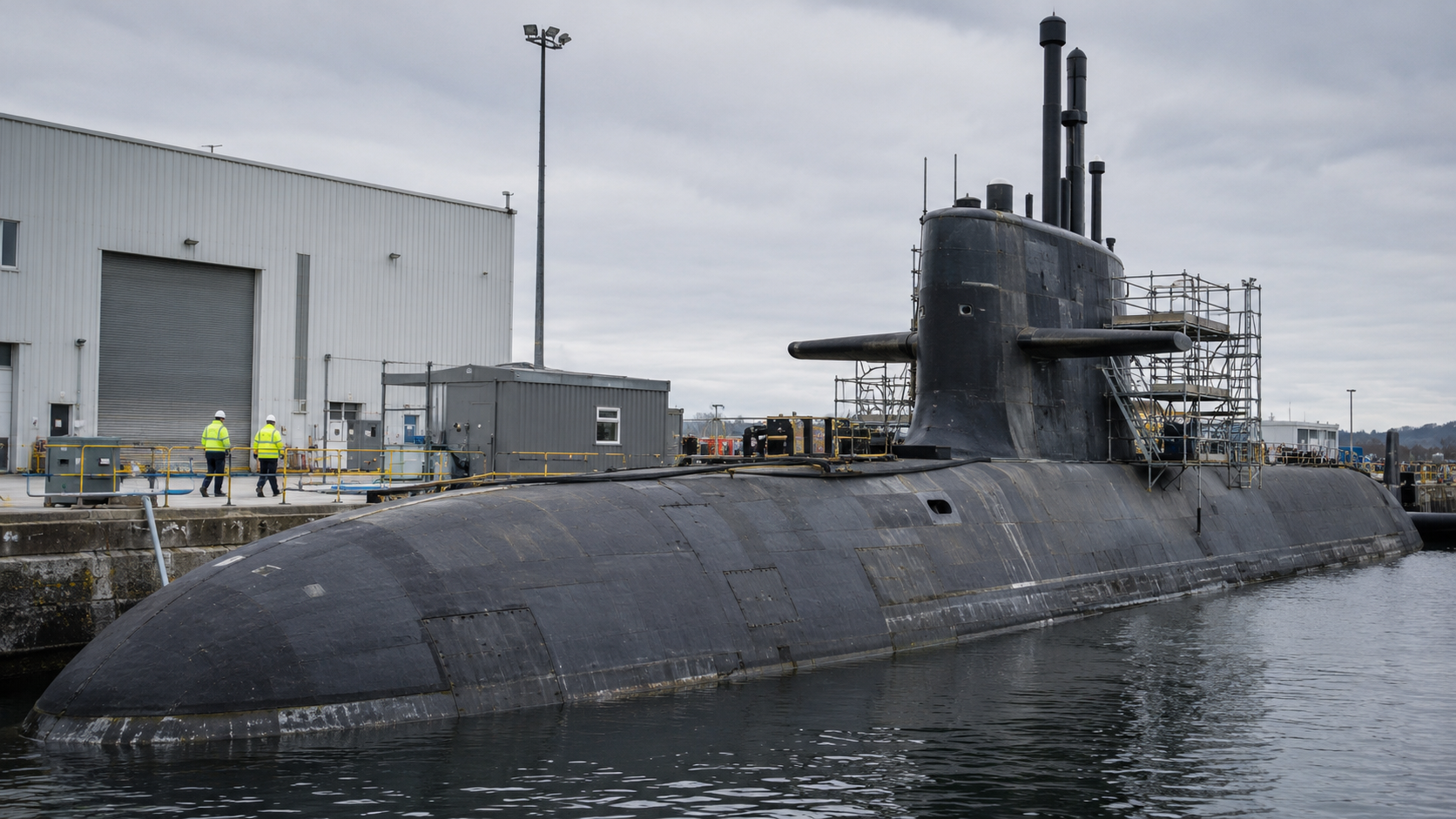
Around £8 billion will be invested to improve submarine availability and readiness, with UK GOV.UK saying the programme will enhance deterrence and national security.
The investment is expected to create 3,000 new British jobs and around 2,500 apprentice and graduate opportunities, supporting economic growth and the government’s drive to help young people enter employment.
The funding forms part of a wider £26 billion investment programme intended to turn naval bases into warfighting-ready facilities.
The Ministry of Defence has awarded its £8 billion Gateway Agreement to UK firm Babcock. UK GOV.UK said the agreement will change how submarine maintenance and critical naval base services are delivered by addressing bottlenecks and modernising working practices.
Around 3,000 new highly skilled positions are due to be created through the agreement, mainly in Plymouth, Clyde and Bristol. A further approximately 2,500 apprentice and graduate roles are planned, providing opportunities for young people who are not currently in education, employment or training.
The agreement is the second major multi-billion-pound submarine-related contract signed by the MOD since publication of the Defence Investment Plan. UK GOV.UK presented the deal as evidence of the department’s commitment to defence investment and increased warfighting readiness.
In its announcement, UK GOV.UK stated: "With this new agreement we’re not just investing in our national security, we’re also making a huge investment in our people. We’re providing opportunities to get young people into work, to bring jobs to communities in Plymouth, Clyde and beyond, and to boost growth across the UK."
It added: "Keeping the public safe will always be my top priority. This investment is a clear demonstration of that commitment - supporting not just the submarines that maintain our nuclear deterrent but also the people who build and maintain them."
The announcement continued: "Our nuclear submarines are the cornerstone of our national security. Every minute of every day, they deter our adversaries and keep our country safe. The deterrent is only as strong as our ability to keep it at sea."
UK GOV.UK also stated: "We’re not going to repeat the mistakes of the past, where investment in our nuclear capability was delayed. Even when we have to move funding from other departments, we will prioritise our nuclear deterrent and getting Britain warfighting ready."
It said: "Not only will this agreement get our subs out of the docks and into the sea faster, it will create 5,500 new jobs, apprenticeships and graduate opportunities. This investment is contributing to the government’s mission to put our young people to work – and no job could be more meaningful than keeping your country safe."
The contract will also support 8,500 existing jobs and increase capacity and capability at submarine maintenance sites at His Majesty’s Naval Bases (HMNB) Devonport and Clyde. According to UK GOV.UK, the larger workforce will improve industry productivity at the waterfront and reinforce the UK’s long-term industrial and national security capabilities.
Under the new contractual framework, incentives will encourage faster delivery. The government said this should reduce the time submarines spend undergoing maintenance and increase their availability for operations considered critical to the Royal Navy’s defence taskings, including the UK’s NATO and AUKUS commitments and nuclear deterrent patrols.
Defence Secretary Wes Streeting will announce the contract during a visit to HMNB Devonport today.
The agreement will also support broader Royal Navy activity, including surface fleet facilities, sea training and future autonomous capabilities. UK GOV.UK described this as a further step in improving the Navy’s warfighting readiness.
The announcement stated: "Our submarines both deliver the nuclear deterrent and protect it. They form the bedrock of UK national security, but their ability to do their job at sea is dependent on us to maintain them."
It continued: "That is why the Gateway Agreement is so important. Through this multi-billion-pound investment, we are backing the highly skilled people who support our fleet, tackling the delays that hold us back and getting submarines through maintenance quicker and back where they belong: beneath the waves. That is how we continue to strengthen our deterrence and keep our country safe."
The five-year agreement includes around £2.4 billion of spending within the wider UK supply chain. Of that amount, around £1 billion is targeted at small and medium-sized businesses, with the government saying the investment will reach communities across the country.
Babcock stated: "We are very proud at Babcock of the critical support that we provide to the Royal Navy, in particular our unwavering support to the Continuous At Sea Deterrent – the UK’s highest defence priority. The Gateway Agreement will enable us, in collaboration with MoD, to continue our support for the deterrent, increase submarine availability and develop the skills, infrastructure and capability to support the Royal Navy’s submarine force for the years ahead."
The company added: "Babcock will continue to strengthen sovereign, industrial capabilities, bringing benefits to communities across the country, including SMEs and local supply chain. Together we will further strengthen the UK’s defence readiness and national strategic resilience."
The Defence Nuclear Enterprise (DNE) and its industry partners operate and sustain the deterrent as a national undertaking. According to UK GOV.UK, this work supports more than 6,000 UK companies and around 47,000 UK jobs, while workforce demand is forecast to reach approximately 65,000 by 2030.
UK GOV.UK described the MOD’s new agreement with Babcock as the latest part of the Defence Nuclear Enterprise’s effort to work more effectively with industry partners and improve delivery of its stated critical mission of keeping safe and capable Royal Navy submarines at sea.
The Gateway Agreement accompanies what UK GOV.UK called the largest naval infrastructure investment programme since the end of the Cold War. Through Project Royal Oak, HMNB Devonport, HMNB Clyde and HMNB Portsmouth are set to receive £26 billion in government investment over 10 years to modernise infrastructure and accommodation and convert the bases into warfighting-ready facilities.
HMNB Clyde, the home of the Royal Navy’s Submarine Service, is expected to benefit from Project Royal Oak through the transformational Programme Euston. The programme is intended to provide a resilient, out-of-water submarine engineering capability by the 2030s. British industry will deliver the capability, enabling essential maintenance of the UK’s current and future nuclear submarine fleet.
Based on a UK GOV.UK news release · Read the original ↗