The Federal Register published a Department of Transportation final rule from the Federal Aviation Administration amending 14 CFR part 71. The action is identified as Docket No. FAA-2026-8449, Airspace Docket No. 26-ASO-15, and RIN 2120-AA66.
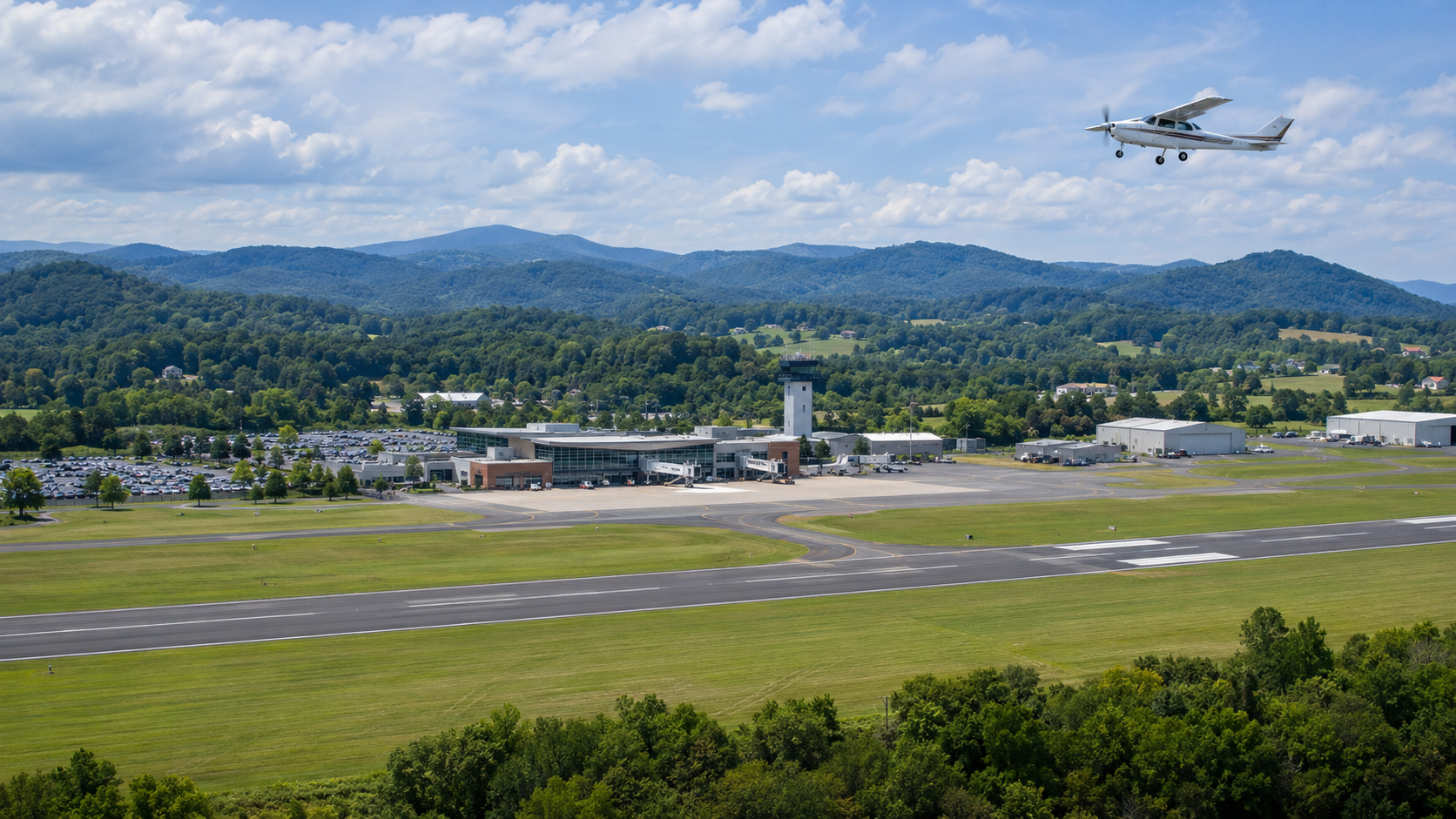
According to the FAA, the rule revises Class D and Class E airspace over Tri-Cities, Tennessee. It expands the radius and northeastern lateral boundaries of the Tri-Cities Class D and Class E surface areas and removes the Class E surface-area extension northeast of Tri-Cities. The agency is also enlarging the western lateral boundaries of the Class E transitional airspace that begins 700 feet above the surface. Other changes update the airport name in the Class D and Class E legal descriptions and replace outdated wording.
The amendments take effect at 0901 UTC on February 18, 2027. The Director of the Federal Register approved the incorporation by reference under 1 CFR part 51, subject to the annual revision of FAA Order JO 7400.11 and the publication of conforming amendments.
The notice of proposed rulemaking, comments submitted to the FAA, the final rule and related background materials can be reviewed at www.regulations.gov by searching for the FAA docket number. The website provides electronic-retrieval instructions and is available 24 hours each day, 365 days each year. The document can also be downloaded from www.federalregister.gov. FAA Order JO 7400.11M, Airspace Designations and Reporting Points, along with later amendments, is available at www.faa.gov/air_traffic/publications/. Information is also available from the Airspace Regulation Group, Operational Policy, Federal Aviation Administration, 800 Independence Avenue SW, Washington, DC 20597, at (202) 267-8783.
Questions about the rule may be directed to Rachel Cruz, Operations Support Group, Eastern Service Center, Federal Aviation Administration, 1701 Columbia Avenue, College Park, GA 30337, at (404) 305-5571.
The FAA said its authority to adopt aviation-safety regulations comes from Title 49 of the United States Code. Subtitle I, Section 106 defines the FAA Administrator’s authority, while Subtitle VII, Aviation Programs, further describes the agency’s jurisdiction. The FAA issued this rule under Subtitle VII, Part A, Subpart I, Section 40103. That provision assigns the agency responsibility for regulating airspace use as needed to promote aircraft safety and efficient use of the airspace. The FAA said the Tri-Cities Class D and Class E amendments fall within that authority.
The FAA previously published a notice of proposed rulemaking for Docket No. FAA-2026-8449 in the Federal Register at 91 FR 51604 on August 11, 2026. That proposal sought to amend Class D and Class E airspace over Tri-Cities, Tennessee, and invited interested parties to submit written comments.
Two comments were received. The FAA characterized one as non-substantive because it pointed out a typographical error in the NPRM’s address for www.regulations.gov, where one letter had inadvertently been omitted. The other commenter raised concerns about expanding controlled airspace and preserving uncontrolled airspace.
According to the FAA, the second commenter misread the proposal and incorrectly understood the expansion to encompass the entire volume of preexisting Class E airspace. The agency said it is adding a 1.7-mile extension to the existing 9.3-mile Class E radius to support Instrument Flight Rule operations. The FAA further stated that the extension lies above a ridgeline on Bays Mountain rather than above a valley and therefore should not affect Visual Flight Rule operations in valley areas.
Class D and Class E airspace designations appear in paragraphs 5000, 6002, 6004 and 6005 of FAA Order JO 7400.11, Airspace Designations and Reporting Points. That order is incorporated by reference each year in 14 CFR 71.1. The final rule modifies the current edition, FAA Order JO 7400.11M, dated July 30, 2026, and effective September 15, 2026. The changes will also appear in the next revision of FAA Order JO 7400.11. FAA Order JO 7400.11M lists Class A, B, C, D and E airspace areas, air traffic service routes and reporting points and is publicly accessible through the sources identified above.
The final rule changes 14 CFR part 71 by revising Class D and Class E airspace over Tri-Cities. The FAA said its review found that the lateral dimensions of the Class D and Class E surface areas, as well as the Class E transitional airspace beginning 700 feet above the surface, needed to be enlarged to contain existing IFR operations. The agency specifically identified departure procedures and the ILS/LOC RWY 5, RNAV (GPS) RWY 5 and RNAV (GPS) RWY 9 instrument approach procedures.
Under the rule, the lateral dimensions of both the Tri-Cities Class D surface area and Class E surface area increase by 0.4 miles, placing them within a 4.7-mile radius of Tri-Cities Airport. The areas also extend within 1 mile on each side of the 042-degree bearing from the airport, beginning at the 4.7-mile radius and continuing to 5.3 miles northeast of the airport.
The rule removes the Tri-Cities Class E surface-area extension to the northeast. The FAA said that extension will no longer be required to contain IFR operations once the Class D and Class E surface areas have been modified.
The FAA is also expanding the Tri-Cities Class E transitional airspace that starts 700 feet above the surface. A western extension measuring 1.7 miles long and 4.2 miles wide is being added, while the existing 9.3-mile radius and the northeastern and southwestern extension components remain in place. The new western portion lies within 2.1 miles on each side of the 270-degree bearing from the airport and runs from the 9.3-mile radius to a point 11 miles west of the airport.
The final rule additionally changes the airport name to Tri-Cities Airport in the Class D legal description and two Class E legal descriptions. In the legal descriptions for the Class D and Class E surface areas, the superseded term “Airport/Facility Directory” is replaced with “Chart Supplement” to follow current FAA naming conventions.
In its regulatory analysis, the FAA described the measure as involving an established body of technical regulations that requires frequent, routine amendments to remain operationally current. The agency determined that the rule is not a “significant regulatory action” under Executive Order 12866 and is not a “significant rule” under DOT Order 2100.6B, “Rulemaking and Guidance Procedure,” dated March 10, 2025.
The FAA said compliance with applicable operating requirements, or minor rerouting by operators that elect to navigate around the controlled airspace, is expected to produce at most de minimis costs. Because the amendments are routine and their expected effect on operators is de minimis, the FAA certified that the rule will not have a significant economic impact on a substantial number of small entities under the Regulatory Flexibility Act.
For its environmental review, the FAA determined that the action qualifies for a categorical exclusion under the National Environmental Policy Act pursuant to paragraphs B-2.5(a) and B-2.5(k) of FAA Order 1050.1G, “FAA National Environmental Policy Act Implementing Procedures.” The agency said the airspace changes are not expected to cause potentially significant environmental effects and that no extraordinary circumstances require preparation of an environmental assessment.
The subjects listed for 14 CFR part 71 are airspace, incorporation by reference and navigation by air. Based on the considerations stated in the notice, the FAA amended the portion of part 71 governing the designation of Class A, B, C, D and E airspace areas, air traffic service routes and reporting points.
The authority citation for 14 CFR part 71 remains 49 U.S.C. 106(f), 106(g), 40103, 40113 and 40120; and Executive Order 10854, 24 FR 9565, 3 CFR, 1959-1963 Compilation, page 389.
The rule amends the incorporation by reference in 14 CFR 71.1 of FAA Order JO 7400.11M, Airspace Designations and Reporting Points, dated July 30, 2026, and effective September 15, 2026.
In paragraph 5000, covering Class D airspace, ASO TN D Tri-Cities, Tennessee, is amended. The listed facility is Tri-Cities Airport, Tennessee, at latitude 36 degrees 28 minutes 31 seconds north and longitude 82 degrees 24 minutes 27 seconds west.
The amended Class D description covers airspace extending upward from the surface through and including 4,000 feet mean sea level within a 4.7-mile radius of Tri-Cities Airport. It also includes the area within 1 mile on each side of the 042-degree bearing from the airport, extending from the 4.7-mile radius to 5.3 miles northeast of the airport. This Class D area will operate on the specific dates and at the times established in advance through a Notice to Airmen. Its effective dates and times will then be published continuously in the Chart Supplement.
In paragraph 6002, for Class E airspace designated as surface areas, ASO TN E2 Tri-Cities, Tennessee, is amended. Tri-Cities Airport is again identified at latitude 36 degrees 28 minutes 31 seconds north and longitude 82 degrees 24 minutes 27 seconds west.
The revised Class E surface area extends upward from the surface within a 4.7-mile radius of Tri-Cities Airport. It also encompasses the airspace within 1 mile on either side of the airport’s 042-degree bearing, running from the 4.7-mile radius to 5.3 miles northeast of the airport. The area is effective on dates and at times announced in advance by a Notice to Airmen, after which the effective date and time will be continuously listed in the Chart Supplement.
In paragraph 6004, which addresses Class E areas designated as extensions to Class D or Class E surface areas, ASO TN E4 Tri-Cities, Tennessee, is removed.
Paragraph 6005, covering Class E airspace extending upward from 700 feet or more above the Earth’s surface, is also amended for ASO TN E5 Tri-Cities, Tennessee. The legal description identifies Tri-Cities Airport at latitude 36 degrees 28 minutes 31 seconds north and longitude 82 degrees 24 minutes 27 seconds west.
The amended E5 area begins 700 feet above the surface within a 9.3-mile radius of Tri-Cities Airport. It includes airspace within 4 miles west and 8 miles east of the 223-degree bearing from the airport, extending from the 9.3-mile radius to 23 miles southwest of the airport. It also covers the area within 2.1 miles on each side of the 270-degree bearing, running from the 9.3-mile radius to 11 miles west of the airport. A northeastern component lies within 2 miles on each side of the 043-degree bearing and extends from the 9.3-mile radius to 14.5 miles northeast of the airport.
The rule was issued in College Park, Georgia, on November 20, 2026, by Andreese C. Davis, Manager of the Airspace and Procedures South Team, Eastern Service Center, Air Traffic Organization. It was filed at 8:45 a.m. on November 23, 2026, as Federal Register Document 2026-23948 under billing code 4910-13-P.
Based on a Federal Register notice · Read the original ↗